A Game Designer/Product Manager Gets Beaten Up by an Artist for Giving Feedback — Is It a Work-Related Injury?
Analyzes whether getting assaulted by a colleague over work feedback qualifies as a work-related injury under Chinese law, comparing two conflicting Supreme Court rulings and identifying key factors that influence the determination.
Whether a game designer or a product manager, their role in a project is basically to provide feedback.
Good feedback is fine.
But bizarre and unconventional feedback can often be headache-inducing, even infuriating.
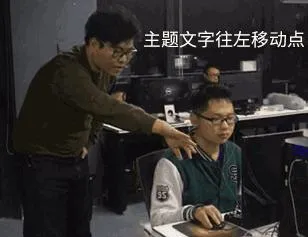
Endure and the storm passes.
Go further and you’ll end up in the station.
If you actually get beaten up by a colleague for giving feedback,
Does the person who got beaten count as having a work-related injury?
*This article reflects only the author’s personal views and does not constitute any legal advice or legal opinion.
I. Definition of Work-Related Injury
A work-related injury refers to personal injury suffered by a worker during the work process or in circumstances related to work.
According to the Regulations on Work-Related Injury Insurance, work-related injuries mainly include the following situations:
Article 14: A worker shall be deemed to have a work-related injury in any of the following circumstances: (1) Suffering accidental injury during working hours and at the workplace due to work-related reasons; (2) Suffering accidental injury while engaged in preparatory or finishing work related to work before or after working hours at the workplace; (3) Suffering violent or other accidental injuries during working hours and at the workplace due to the performance of work duties; (4) Suffering from occupational diseases; (5) Suffering injury or going missing due to work-related reasons during a business trip; (6) Suffering injury in a traffic accident for which the worker is not primarily responsible, or in an urban rail transit, passenger ferry, or train accident, during the commute to and from work; (7) Other circumstances that laws and administrative regulations provide shall be deemed as work-related injuries. Regulations on Work-Related Injury Insurance Article 15: A worker shall be deemed as having a work-related injury in any of the following circumstances: (1) Dying from a sudden illness during working hours and at the workplace, or dying within 48 hours after rescue efforts fail; (2) Suffering injury while participating in emergency rescue, disaster relief, or other activities to protect national interests or public interests; (3) A worker who previously served in the military, was injured or disabled due to war or duty, has obtained a revolutionary disabled soldier certificate, and suffers a recurrence of the old injury after joining the employer. Regulations on Work-Related Injury Insurance
In summary, the injury must be suffered due to work or at the workplace.
So, a game designer/product manager getting beaten up for proposing or adjusting a relevant plan seems to fit the criteria:
- Due to work;
- At the workplace;
- Suffering personal injury.
So, case closed — it’s a work-related injury, right?
II. Current Cases
However, looking at current cases, the courts’ determinations are inconsistent.
Even the Supreme People’s Court’s own judgments can be contradictory.
Supporting Case: (2020) Supreme People’s Court Administrative Retrial No. 68
【Basic Facts】
At a construction site, Liu urgently needed to use a tower crane to lift a batch of steel bars for his work. During the urging process, Liu argued with the tower crane operator, Liu Dong. The two first exchanged words, then came to blows. Neither party suffered serious injuries in the first altercation. However, Liu Dong became increasingly aggrieved and, to retaliate against Liu, went directly back to the dormitory to get a knife and returned to the construction site to stab Liu.
Liu was diagnosed with a ruptured left eyeball at the hospital.
Liu Dong was apprehended by police. Liu applied for work-related injury benefits.
【Rulings at Various Levels】
Municipal Human Resources and Social Security Bureau: “The accidental injury suffered by Comrade Liu falls within the scope of work-related injury recognition under Article 14(3) of the Regulations on Work-Related Injury Insurance and is hereby recognized as a work-related injury. ”
Provincial Department of Human Resources and Social Security: “Considers Liu’s injury to have arisen from personal grudges following an argument with another person, and that his injury does not result from violent injury suffered in the performance of work duties… Revokes the Municipal Bureau’s Decision No. 430 on Work-Related Injury Recognition. ”
Trial Court: “The violent injury he suffered was caused by intentional harm from another person during working hours and at the workplace due to work-related reasons, which meets the above provisions and shall be recognized as a work-related injury. ”
Appellate Court: “Although the dispute between Liu and Liu Dong originated from work, the direct cause of the violent injury was the personal violent assault after a conflict with Liu Dong, which is not directly related to the performance of his own work duties and responsibilities… The trial court’s application of the law was erroneous and should be reversed. ”
Supreme Court: “Although Liu Dong’s intentional injury was the direct cause, there is also a causal relationship between Liu’s injury and work-related reasons. Liu Dong’s stabbing of Liu cannot be attributed to personal grudges to deny that Liu’s injury was caused by violent injury in the performance of work duties… Both parties had some fault for failing to handle the work dispute calmly, but Liu’s fault should not lead to him suffering violent injury, nor is it sufficient to preclude the determination of performance of work duties… Liu Wei’s retrial request is sustained (i.e., recognized as a work-related injury). ”
【Key Points of the Judgment Indicated by the Official Case Database】
According to Article 14(3) of the Regulations on Work-Related Injury Insurance, recognizing violent or other accidental injuries as work-related injuries requires the simultaneous satisfaction of three conditions: working hours, workplace, and performance of work duties. Regarding whether violent injuries suffered during the performance of work duties can be recognized as work-related injuries, the key lies in determining the degree of relevance between the violent injury and the performance of work duties. The legislative purpose of the Regulations on Work-Related Injury Insurance is to ensure that workers who suffer accidental injuries due to work or contract occupational diseases receive medical treatment and economic compensation. It is intended to provide relief for workers who suffer violent or other accidental injuries during work. When applying this provision from an institutional value perspective to determine whether an injury is work-related, a comprehensive assessment should be made based on the time, place, and cause of the violent injury to determine whether it is work-related. Improper handling of work disputes is not grounds for precluding the recognition of a work-related injury.
Opposing Case: (2018) Supreme People’s Court Administrative Application Retrial No. 8657
【Basic Facts】
At a coal mine’s underground production line, an electric motor unexpectedly stopped. Li determined after inspection that repairs were needed. While fetching repair tools, Li passed by Tian and accidentally fell, knocking Tian over. The two argued and began grappling. After being separated by colleagues, Li again used a mining tool, a shovel, to grapple with Tian and kneed Tian in the face. After being separated by colleagues again, Li was struck on the head by Tian using a mining tool, an axe handle, causing injury. Li was then sent to the hospital by other colleagues.
Tian was apprehended by police. Li applied for work-related injury benefits.
【Rulings at Various Levels】
Municipal Bureau (first instance): “The accidental injury suffered by Li does not meet the conditions for recognition as a work-related injury or deemed work-related injury under Articles 14 and 15 of the Regulations on Work-Related Injury Insurance and is hereby determined not to be recognized as a work-related injury or deemed work-related injury. ”
Municipal Bureau (second instance, due to court finding of erroneous legal application): “Considers that the accidental injury Li suffered does not meet the conditions for recognition as a work-related injury or deemed work-related injury under the Regulations on Work-Related Injury Insurance and is determined not to be recognized as a work-related injury. ”
Trial Court: “Li’s actions during working hours and at the workplace — moving around for repairs — were part of his work. The accidental fall while working, knocking over Tian (who was also working), leading to grappling and injury, occurred within a short continuous period. There is insufficient evidence to prove that Li’s injury was due to personal venting of anger. Therefore, the defendant’s argument that Li’s injury was due to personal venting rather than performance of work duties and should not be recognized as a work-related injury is not supported. The Municipal Bureau’s facts were clearly established, but the application of law was erroneous and should be reversed. (Recognized as work-related injury) ”
Appellate Court: “Although Li’s accidental fall while performing work duties led to a grappling dispute with Tian, which can be said to have some connection with work-related reasons, after being separated by others, not only did the two not heed the advice to make peace and maintain good relations with colleagues, but they grappled again, resulting in injury. This behavior does not constitute violent injury suffered in the process of performing work duties. There is no direct causal relationship between the violent injury he suffered and the performance of work duties. Li’s injury does not meet the circumstances of ‘violent or other accidental injuries suffered due to performance of work duties’ under Article 14(3) of the Regulations on Work-Related Injury Insurance… The Municipal Bureau’s decision not to recognize a work-related injury is clearly based on facts and correctly applies the law. (Determined not to be a work-related injury) ”
Supreme Court: “Although Li’s injury occurred during working hours and at the workplace and has some connection with the performance of work duties, this connection is not direct. The direct cause of Li’s injury was being beaten by another person during a physical altercation. … The violent injury Li suffered does not have a direct and necessary causal relationship with his performance of inspection and repair duties. Li’s injury does not meet the circumstances of suffering violent or other accidental injuries due to performance of work duties under Article 14(3) of the Regulations on Work-Related Injury Insurance. The appellate court’s reversal of the trial court’s judgment and dismissal of Li’s claim is not improper. (Determined not to be a work-related injury) “
III. Why Are There Differences in Work-Related Injury Determinations?
At first glance, the two cases appear very similar:
A has a dispute with B due to work reasons
↓
A and B fight and are separated
↓
B injures A with a tool
↓
A applies for work-related injury benefits, B bears criminal liability
In the (2020) Supreme Court Retrial No. 68 case, even though there was a clear act of “leaving the scene to retrieve a weapon and returning to attack” as an act of retaliation, the Supreme Court still recognized it as a work-related injury. In contrast, although the conflict in the (2018) Supreme Court Retrial No. 8657 case was a continuous process of a single argument, it did not receive the Supreme Court’s recognition as a work-related injury.
In my opinion, the core reason may be: whether A escalated the dispute.
In the (2020) Supreme Court Retrial No. 68 case, after the argument between the two ended, Liu (the victim) continued working at the scene and did not escalate the situation further. Liu Dong left the scene to retrieve a weapon and returned to commit violence, clearly being the party responsible for escalating the conflict. Therefore, Liu had no obvious fault regarding the consequences of the violent assault.
In contrast, in the (2018) Supreme Court Retrial No. 8657 case, after being initially separated, Li again used a mining tool, a shovel, to grapple with Tian and kneed Tian in the face. At this point, Li had escalated the situation, changing from a “party to a work dispute” to an “aggressor.” Tian’s subsequent counterattack was no longer based on the previous accidental fall but was in response to Li’s attack. The nature had evolved into a mutual fight.
This subtle but crucial difference may be the main reason for the different outcomes in the two cases. In the process of determining work-related injuries, courts not only consider the superficial similarity of events but also deeply analyze the roles and responsibilities of the parties in the conflict escalation process.
In the (2020) Supreme Court Retrial No. 68 case, while the Supreme Court expressed, in its reasoning, a rejection of the “perfect victim” requirement:
From the perspective of protecting workers’ legitimate rights and interests, Article 14 of the Regulations on Work-Related Injury Insurance should be interpreted with appropriate leniency.
The legislative purpose of the Regulations on Work-Related Injury Insurance is to ensure that workers who suffer accidental injuries due to work or contract occupational diseases receive medical treatment and economic compensation. The legislative intent of Article 14(3) is to provide relief for workers who suffer violent or other accidental injuries during work.
When applying this provision from an institutional value perspective to determine whether an injury is work-related, a “pure victim” should not be required — that is, only victims who are completely faultless in the violent injury can be recognized as ‘performing work duties.’ This would be contrary to the legislative intent of Article 14(3) of the Regulations on Work-Related Injury Insurance.
However, when the victim becomes the party leading the escalation or transforms into the aggressor — that is, exhibiting a second act of “imperfection” — it may very well lead to the inability to obtain work-related injury benefits.
IV. Key Points for Possible Recognition as Work-Related Injury
Combining the relevant laws and regulations with the two cases, under what circumstances would a game designer/product manager who gets beaten up be considered to have suffered a work-related injury?
1. Dispute Over Work, Not Personal Issues
That is, there was no obvious “personal grudge” between the two parties beforehand.
The cause of the conflict should be a work-related dispute, not a personal vendetta. If there was an obvious personal conflict between the two parties beforehand, and this conflict merely used work as an opportunity to erupt, it may not be considered a work-related injury.
2. Arising from Work
The beating must be directly related to the performance of work duties.
For a game designer/product manager, this could include:
-
Conflicts arising from proposing work suggestions or opinions during project meetings;
-
Making unreasonable demands;
-
Arguments triggered during the review or evaluation of others’ work;
-
Repeatedly changing requirements, or having work completed but not using it.
etc., actions related to the performance of work duties (even if the relevant requirements are indeed outrageous).
But not:
-
Arguing about the TGA Game of the Year winner;
-
Mocking someone for dying too many times to a boss;
-
Commenting on someone’s work attire;
-
Accidentally knocking over someone’s work meal.
etc., behaviors that simply occur at the workplace.
3. Typically Occurs Within the Company
The beating usually needs to occur at the workplace.
This could include:
-
Company offices, meeting rooms, and other regular work areas;
-
Company restrooms, break rooms, and other areas;
-
External meetings or training venues organized by the company;
-
Client or partner premises visited for work purposes.
But if working remotely, a colleague traveling through a network cable to beat someone may not count.
Additionally, being beaten while discussing work after work hours or outside the company may also not count as a work-related injury.
4. The Designer/Product Manager Did Not Escalate the Situation
This is especially important.
The person who was beaten should remain relatively passive throughout the process and should not:
-
Proactively provoke or verbally agitate (“Unless you kill me, if you can’t finish the drawing today, I’ll complain to the boss about you”);
-
Be the first to use violence or verbal insults (“What do you mean there are too many changes? It’s always been changed this many times, hasn’t it? Have you thought about whether you’ve been working hard enough? Did you just scribble the earlier content?”);
-
Escalate work criticism to personal attacks (“You can’t even handle such a simple plan? I think the office cat’s art skills are much better than yours”);
-
After an initial conflict subsides, proactively start a new dispute (after being separated, go back to counter-attack the hitter, or provoke again);
-
Use force that is severely disproportionate to the current dispute (e.g., the artist hits you with a drawing tablet, but you pick up a dumbbell from under the programmer’s desk to counter-attack).
Of course, these are only conditions and practices that make [work-related injury recognition] more likely. Specific recognition may also be related to the cause, process, etc., of the incident.
The above uses game designers and product managers as examples, but can also be analogized to artists, programmers, operations staff, and other personnel.
V. Conclusion
Many arguments can occur at work, especially when work pressure is high or deadlines are tight. Quarrels happen often and may even lead to violent behavior. However, even when facing unfair treatment or minor physical contact at work, the focus should be on rational communication and self-protection, rather than adopting extreme words or violent counterattacks. Maintaining calm and professionalism not only helps prevent conflict escalation but also facilitates subsequent work-related injury recognition.
Of course, this does not mean that anyone must silently endure all improper behavior. When facing serious threats or violence, moderate self-defense is permissible. The key is that the response must be proportionate to the level of threat, and intervention from company management or relevant authorities should be sought at the first opportunity.
Don’t fight. Don’t hit colleagues.
After all, even a cat that hits a colleague will be jailed, let alone a human.
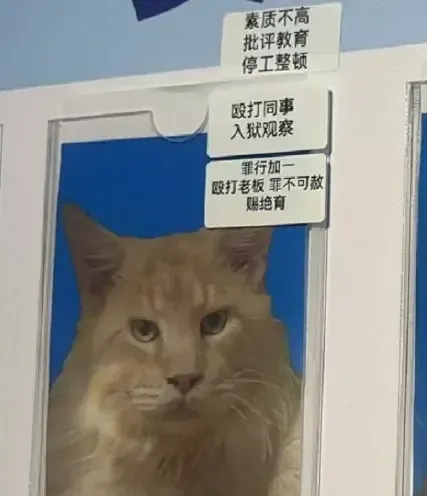 (Note: Humans will not be neutered for hitting their boss.)