How to Calculate Interest When an Overseas Partner Owes Foreign Currency? [Official Authoritative Guide]
China's Supreme People's Court reply (2025) provides standardized interest rates for overdue foreign currency debts — using US dollar loan averages, EURIBOR, SONIA, and HIBOR — when contracts lack interest clauses.
Amid the wave of globalization, China’s gaming industry is going overseas at an unprecedented pace.
Whether importing overseas blockbusters or pushing domestic精品 to the world, cooperation with international partners is becoming more frequent, and transactions involving foreign currencies are commonplace.
Licensing fees payable by overseas publishers, advertising revenue shares settled by platforms, or technical service fees often involve settlement in US dollars, euros, or even Hong Kong dollars.
However, when an overseas partner defaults on a foreign currency account, many game companies face a thorny problem: besides the principal, how should overdue interest be reasonably calculated?
The “Supreme People’s Court’s Reply on the Standards for Calculating Overdue Payment Interest in Foreign Currencies and Hong Kong, Macao, and Taiwan Currencies (Fa Shi [2025] No. 2)” (hereinafter “the Reply”), effective from February 13, 2025, provides clear legal guidance for game companies dealing with overdue foreign currency accounts.
So, when faced with overseas debts, how should game companies calculate interest in accordance with the law?
Let’s explore this.
This article represents only the author’s personal views and does not constitute legal advice or legal opinion.
I. Contractual Agreement Takes Priority, But Subject to Caps
When game companies sign contracts with overseas partners, they usually specify payment terms, including the method for calculating overdue interest. According to the “Reply,” if the contract stipulates the standard for calculating overdue interest, the court will respect the parties’ agreement as a priority.
Therefore, when game companies negotiate with overseas publishers or service providers, and when legal departments draft or approve relevant cooperation contracts, they can lock in the interest calculation method through clear contract terms, reducing the risk of subsequent disputes.
However, there is an important premise: the interest rate agreed upon by both parties cannot exceed the upper limit stipulated by the “applicable law of the dispute” (i.e., the specific national law chosen by the parties in the contract). Simply put, even if both parties agree on a very high interest rate, if that rate violates the mandatory provisions of the applicable country or region’s laws (e.g., usury restrictions), the court will not uphold the portion exceeding the statutory cap.
For example, if a Chinese game company agrees with a US publisher on an annualized overdue interest rate of 20% for US dollar debts, but the relevant US law caps the rate at 10%, the portion exceeding 10% will not be recognized.
Therefore, when signing contracts, game companies are advised to first review relevant local laws and regulations or consult professional lawyers to ensure the agreed interest rate is both reasonable and compliant, avoiding the discovery of “miscalculations” only when they get to court/arbitration.
II. No Agreement? Follow the Standard
Of course, in actual business operations, contracts between game companies and overseas partners may not always be comprehensive. A more common scenario is that the contract does not include interest provisions, or the terms are vague.
In response to this situation, the “Reply” provides clear calculation standards, allowing game companies to have a basis when pursuing overdue interest.
US Dollar
For US dollar debts, game companies can refer to the dollar loan average interest rates published in the regularly released “China Monetary Policy Implementation Report” appendix on the People’s Bank of China website. These rates are divided by loan term into categories such as within 3 months, 3 to 6 months, 6 to 12 months, 1 year and above, etc. The court will select the applicable rate based on the specific circumstances of the case.
For example, if a game company cooperates with a US studio to develop a mobile game and the studio defaults on a $300,000 development fee, the court may choose the 6-to-12-month US dollar loan average interest rate to calculate interest based on the duration of the default.
Other Major Foreign Currencies
For other major foreign currencies such as the euro, pound sterling, and Japanese yen, the “Reply” also provides reference standards.
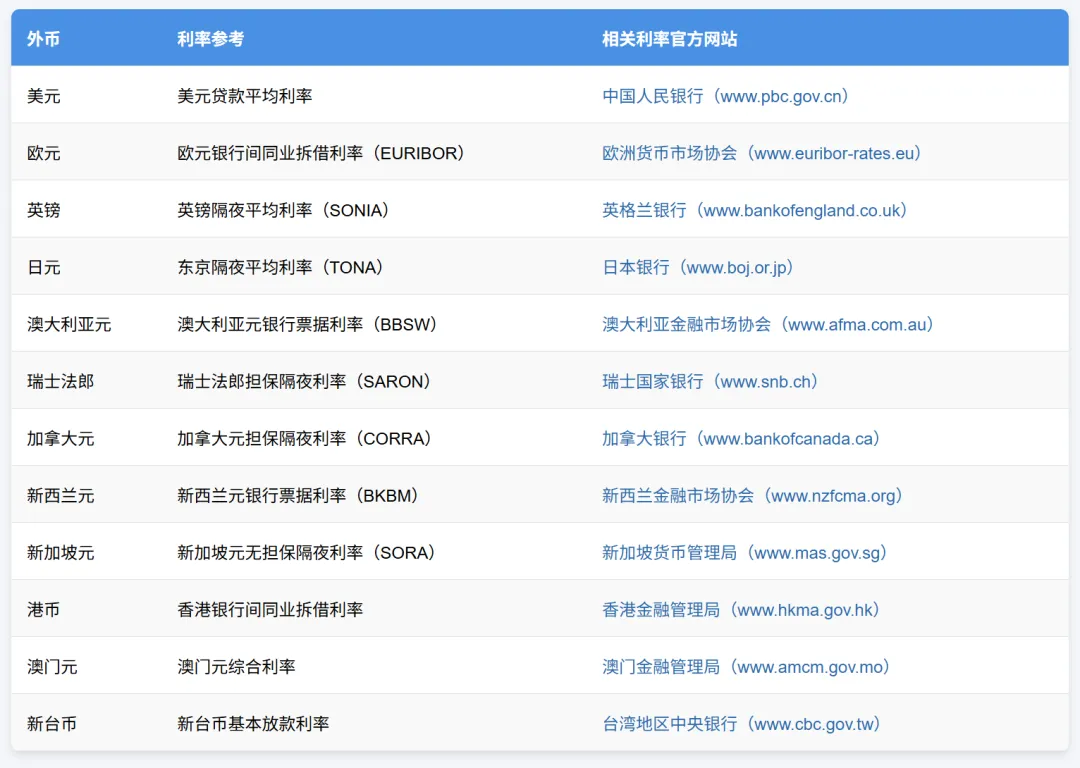
For example, the euro can refer to the Euro Interbank Offered Rate (EURIBOR), and the pound sterling can refer to the Sterling Overnight Index Average (SONIA). These rates are published by authoritative financial markets, reflecting actual market funding costs and ensuring fair and reasonable interest calculation. If the debt involves a relatively niche currency, such as the New Zealand dollar or Singapore dollar, game companies can refer to the New Zealand Dollar Bank Bill Rate (BKBM) or the Singapore Overnight Rate Average (SORA), etc.
For other foreign currencies, the benchmark interest rates published on the official websites of the relevant central banks can be referenced.
Hong Kong, Macao, and Taiwan
When game companies expand in the Asian market, they often deal with partners from Hong Kong, Macao, and Taiwan, involving transactions in Hong Kong dollars, Macanese patacas, and New Taiwan dollars.
The “Reply” clarifies that contractually agreed interest rates still take priority. However, if there is no agreement or the agreement is unclear, Hong Kong dollars can refer to the Hong Kong Interbank Offered Rate (HIBOR), Macanese patacas can refer to the Macau Pataca Composite Interest Rate, and New Taiwan dollars can refer to the New Taiwan Dollar Basic Lending Rate.
For example, if a mainland Chinese game company entrusts a Hong Kong operations team to promote a game, with the contract stipulating settlement in Hong Kong dollars but not mentioning overdue interest, and the operations team defaults on payment, the game company can claim interest based on the Hong Kong Interbank Offered Rate.
III. Quick Reference Table for Major Currency Interest Rates
For your convenience, the following table organizes the major foreign currencies mentioned in the “Reply,” their reference interest rate standards, and related official websites:
IV. How Game Companies Should Respond
When facing overseas debts, game companies not only need to understand interest calculation standards but should also take proactive measures to reduce risks.
For example, during the contract negotiation phase, clearly define the interest rate clauses for overdue payments (let the legal department check in advance) and ensure the clauses comply with applicable law.
Also, regularly monitor accounts receivable and reconcile on time to detect overdue situations promptly and prevent losses from escalating.
Finally, if a dispute unfortunately arises, it is advisable to engage a lawyer familiar with international commercial disputes to assert legitimate rights and interests.