"Ding!" | Is the Black Myth: Wukong Game Trainer a "Sales Booster" or the "Crime of Destroying Computer Information Systems"?
Analyzes whether single-player game trainers for Black Myth: Wukong constitute copyright infringement, unfair competition, or the crime of destroying computer information systems, arguing they are generally legal and may even boost game sales.
With the official release of Black Myth: Wukong on August 20, a large number of “Destined Ones” began their journey to find soul vessels and spiritual artifacts.
On launch day, Steam reached a peak concurrent player count of 2.22 million. As of 4 PM on August 21, there were still 1.35 million concurrent players.

This concurrent player record has become the highest in Steam history for single-player games and the second highest across all game categories.
However, as a Souls-like action RPG with no difficulty adjustment options, the difficulty of boss fights in Black Myth: Wukong may exceed what some players are used to.
For players who just want a smooth combat experience or only want to experience the story, a trainer might be their best option.
Among them, the most famous game trainer development team is undoubtedly “Wind X Moon Shadow”:
 (Internet meme)
The sound of “Ding!” when a function activates has become the “well-known trademark” of this team’s trainers, comparable to QQ’s “ahem” and “ding-ding.”
However, despite being loved by players,
Do single-player trainers infringe upon the rights of game companies?
Do they constitute illegal or criminal activity?
- This article reflects only the author’s personal views and does not constitute any legal advice or legal opinion.
** This article does not represent a recommendation or endorsement of any related software.
*** Please play the game under conditions permitted by the game developer.
I. Single-Player Game Trainers Have a Long History
The history of single-player game trainers can be traced back to the DOS era.
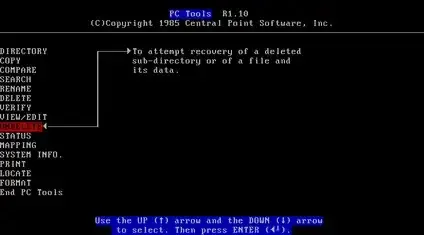
At that time, trainers mostly worked by modifying the game’s save files. Players had to manually find the save files and use a hex editor or specialized tools to modify values such as health, money, or other key parameters. These modifications did not take effect in real-time and would only appear when the game loaded the save file next time.
When I was young, while playing the DOS version of Chinese Paladin, I relied on my family’s help to modify the save file for more health and money, ensuring an enjoyable playthrough.
As technology advanced, trainers gradually moved into the era of memory modification. Trainers find the memory space occupied by the game during runtime and directly modify data in memory. This method allows players to change game parameters in real-time during gameplay and gradually became the mainstream approach (though some modern single-player games still have save file editors).
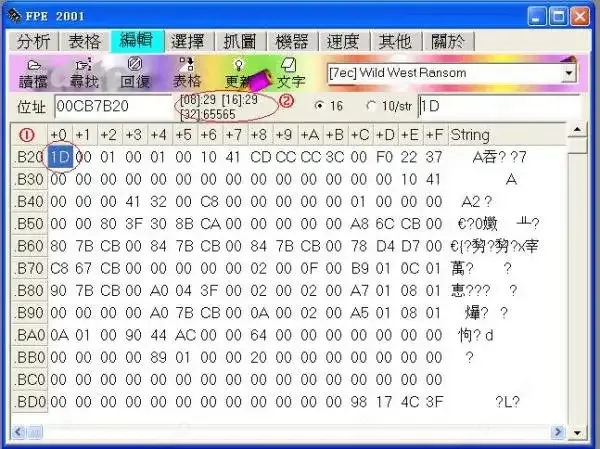
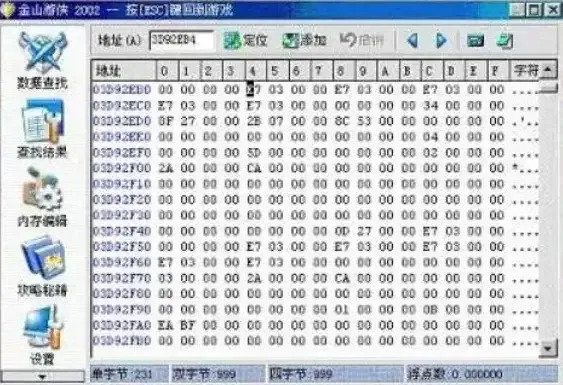
Among the most popular among domestic players were likely the FPE series and the Kingsoft Ranger series of trainers.
II. How Single-Player Game Trainers Work
Save File Modification
Since the beginning, the save mechanism of single-player games has basically been: when a player saves progress, a save file is generated recording the player’s game state and various data, such as character attributes, equipment, quest progress, money, level position, etc. This save file is usually stored in binary format and can be directly viewed and modified using a hex editor.
Since game save data usually follows a certain structure, by recording some character data values in advance and searching for them in the save file, you can generally find the specific location where the data is stored. By modifying these values one by one, when the game loads the save file again, the character will have the modified values.
Memory Scanning
With technological development and improved computer hardware, in-memory scanning (also called “memory modification”) is the most common technology used by modern trainers (perhaps even without exception). It allows players to dynamically change various game parameters while the game is running.
When a game is running, all game data (such as player health, position, equipment, etc.) is temporarily stored in the computer’s memory. By finding and modifying this memory data, players can affect the game state in real-time.
The most common approach is: the trainer first starts a memory scan function. The player inputs a current game parameter (such as current gold coins), and the trainer searches the game’s memory area for memory addresses matching that value. Initial search results usually contain a large number of candidate addresses. The player can buy and sell items, then input the updated value into the trainer, which will scan again and filter memory addresses, gradually narrowing down the target range. After a few rounds of filtering, the trainer can precisely locate the memory address storing that parameter. The player only needs to adjust the value at that memory address to instantly see changes in the game, such as gold coins increasing in real-time.
The “Wind X Moon Shadow” series of trainers basically uses memory scanning technology. The trainer team has already found and fixed the game memory addresses in advance. When the player activates a function, the trainer automatically starts modifying or fixing the value at that memory address (infinite health, etc.). With a “ding,” the player can enjoy the game.
III. Are Single-Player Game Trainers Illegal?
In my opinion, they are not illegal.
The reasons are as follows:
Single-Player Trainers Do Not [Affect Other Players’ Experience]
Single-player games, as the name implies, are games meant to be experienced by one player alone.
Unlike online games, there is no third-party participation during single-player gameplay. Each player’s gaming experience is independent and unique. Anyone can choose the time and manner in which they experience the game.
Whether it’s save file modification or memory modification, whether it’s infinite health or one-punch kills, or even making bosses able to kill the player in one hit (increasing difficulty), it only affects the individual player’s gaming experience. It cannot interfere with or affect other players (spoiler trolls who speed through the game are an exception). Other players can continue to suffer as they would, continue feeding the tiger, etc.

Therefore, using a trainer
does not constitute infringement against other players.
Single-Player Trainers Do Not [Affect Game Sales]
Unlike online game trainers (AKA “cheats”), single-player trainers do not affect game sales.
They may even help increase sales.
In online games, using cheats can destroy the fairness of the game, drive away players who don’t use cheats, thereby affecting the game’s player base and causing the game operator’s revenue to decline.

But in single-player games, using a trainer allows players with insufficient experience or skill to also experience the fun of the game, preventing players from getting angry and refunding because they can’t complete the game (Steam allows refunds for games played less than 2 hours). It can also attract players who are worried about difficulty to purchase the game and play it (even if they can’t beat it, they can use a trainer). Without trainers, some players might choose not to buy the game or refund it, opting instead to watch a story walkthrough video, resulting in some revenue loss for the game developer.
It can be said that, in the context of single-player games, trainers not only do not harm game sales, but may also serve as a powerful tool to boost game sales.
Single-Player Trainers Do Not [Damage Game Operator Data]
As discussed above, whether it’s save file modification or memory modification, the player or trainer only needs to operate on the player’s local data.
This data does not interact with the game operator’s database. There is no need to intrude or otherwise modify the game operator’s database, nor is there any uploading or interference with the game operator’s data judgment. This means there is no possibility of damaging the game operator’s data (except for affecting game statistics, but these are usually filtered out).
No matter how the player modifies locally, even in the extreme case of modifying memory data billions of times per second, besides potentially damaging the player’s own computer, it has nothing to do with the game developer or operator and will not affect their equipment or data.
Does the Trainer Author Constitute Copyright Infringement, Unfair Competition, or Even the Crime of Destroying Computer Information Systems?
【Copyright】
First, game trainers do not directly modify the game’s code itself.
As discussed above, trainers mainly act on save files or memory data. Whether this data can be considered as having copyright is a debatable issue. In my opinion, save files or memory data are not protected objects under copyright law.
Copyright protection for games covers the game’s code, text, artwork, and other original content. The save data generated by players or the data temporarily stored in memory during gameplay is more like a record of the player’s personal gaming behavior. This lacks originality and does not meet the standard of creative output protected by copyright law.
Therefore, from a copyright perspective, the objects that trainers operate on are not within the scope of copyright protection.
【Unfair Competition】
Trainer developers generally do not use improper means to directly interfere with the normal competitive order of the game market, nor do they constitute a competitive relationship with game developers.
Most single-player game trainers are created voluntarily by player enthusiasts, community developers, or specific trainer teams. Their purpose is usually to provide players with a more personalized gaming experience and enhance the fun of the game, rather than obtaining economic benefits for themselves or others.
For example, the “Wind X Moon Shadow” team’s trainers are all free to download without registration or payment:
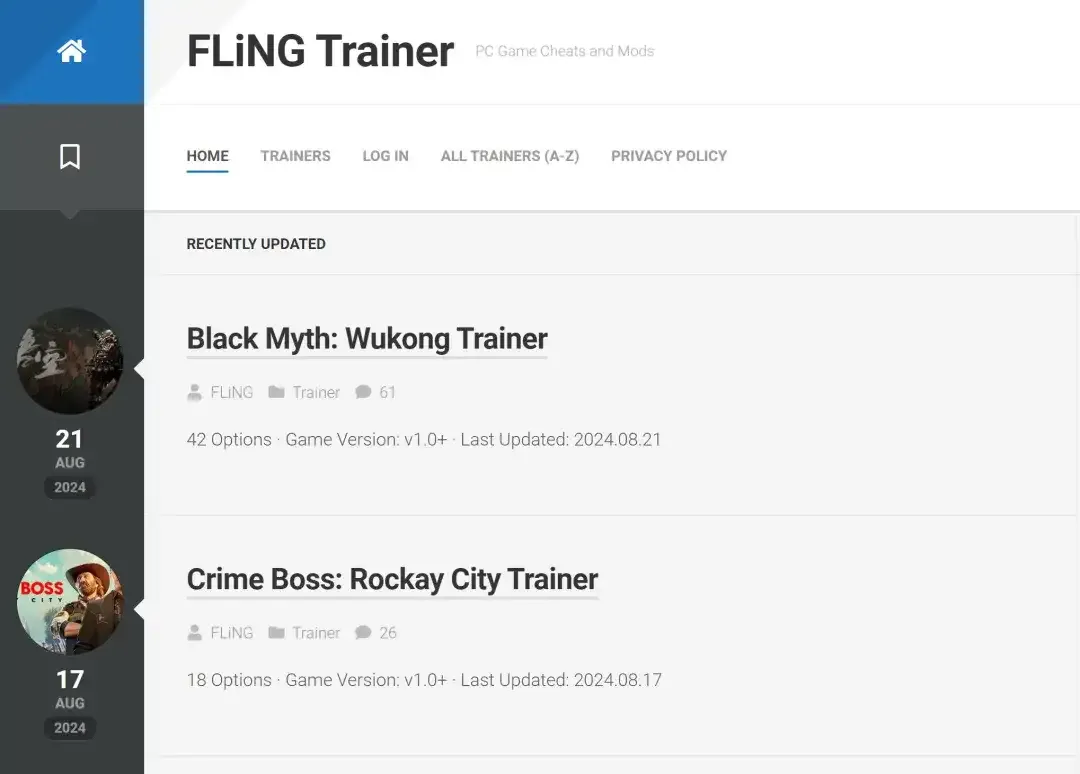
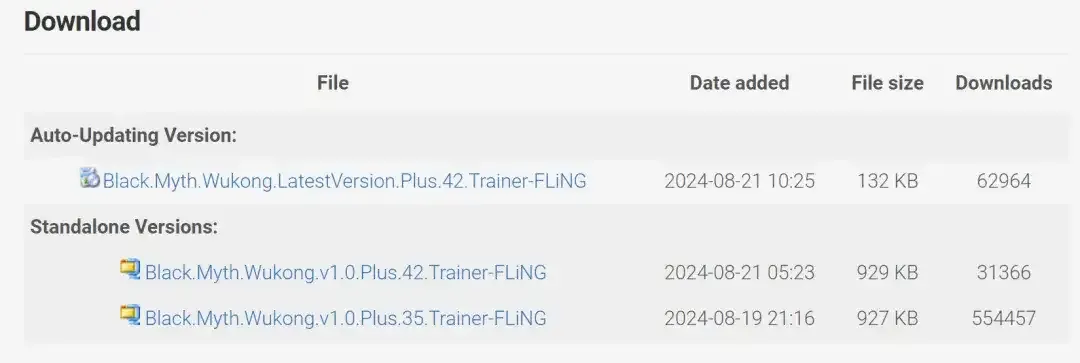 (Yes, it’s already been downloaded over 600,000 times)
This is different from online game cheats, which are often used through paid downloads or time-based payments. At the same time, cheats profit by destroying the fair competitive environment within the game, which clearly constitutes unfair competition.
Therefore, from an unfair competition perspective, trainer authors typically do not constitute unfair competition against game companies.
【Crime of Destroying Computer Information Systems】
The crime of destroying computer information systems usually refers to unauthorized access, alteration, deletion, or interference with data in a computer system, affecting the normal operation of the system.
Article 286 [Crime of Destroying Computer Information Systems; Crime of Dereliction of Duty in Network Services]: In violation of state regulations, deleting, modifying, adding, or interfering with the functions of a computer information system, causing the computer information system to be unable to operate normally, if the consequences are serious, the offender shall be sentenced to fixed-term imprisonment of not more than five years or criminal detention; if the consequences are particularly serious, the offender shall be sentenced to fixed-term imprisonment of not less than five years. In violation of state regulations, deleting, modifying, or adding data and applications stored, processed, or transmitted in a computer information system, if the consequences are serious, shall be punished in accordance with the provisions of the preceding paragraph. Intentionally creating and disseminating computer viruses and other destructive programs that affect the normal operation of computer systems, if the consequences are serious, shall be punished in accordance with the provisions of the first paragraph. If a unit commits any of the crimes mentioned in the preceding three paragraphs, the unit shall be fined, and the directly responsible person in charge and other directly responsible personnel shall be punished in accordance with the provisions of the first paragraph. Criminal Law of the People’s Republic of China
Looking solely at the provisions of the second paragraph, modifying save files or memory data seems to also constitute “deleting, modifying, or adding” stored data.
However, in my opinion, the prerequisite for this crime is [against the user’s will] and [causing loss to the user or the game developer/operator].
From the discussion of trainer principles above, using a trainer is necessarily the user’s own choice. Moreover, in single-player games, using a trainer in the vast majority of cases does not touch the game operator’s servers or computer systems and does not cause any economic loss to the game developer or operator. At the same time, when the trainer does not contain malicious code, it certainly does not cause loss to the player.
Similarly, single-player game trainers do not intrude upon the game program, causing the game program to become inoperable (otherwise, players would be the first to complain).
Therefore, in most cases, authors of single-player game trainers are not involved in the illegal act of destroying computer information systems.
IV. Supplementary: MOD Culture
Game MOD, short for “Modification,” refers to modifications and extensions made by players or developers based on the original content of a game. MODs come in various forms and may involve game graphics, characters, maps, quests, gameplay mechanics, and other aspects, aiming to enrich or change the gaming experience.
Simply put, it is a “trainer” for game content.
In the single-player domain, MODs are very popular among users. Many game developers even actively release MOD design tools, managers, and other software, allowing enthusiasts to help design and share various MODs.
On Steam, there is even an official MOD manager called “Steam Workshop.”
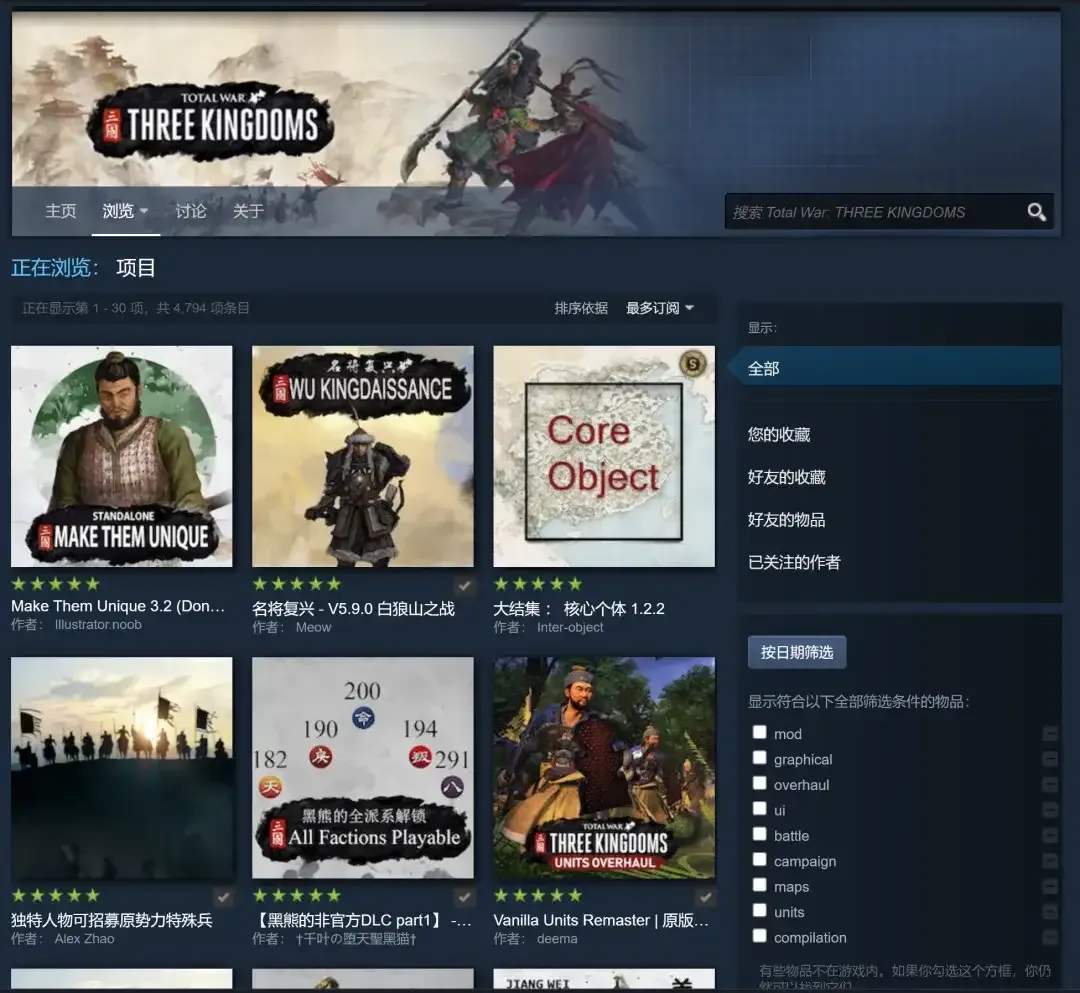
For example, the Steam Workshop of the famous Three Kingdoms-themed game Total War: Three Kingdoms features various MODs released by enthusiasts, including art modifications, text modifications, numerical modifications, etc., which might appear to “infringe copyright.”
It can be said that in the single-player domain, trainers are nothing. Game developers are even happy to let users modify the game themselves (and it’s convenient to steal MODs for the next version’s update content).
In some cases, excellent MODs can even evolve into famous games.
For example, Counter-Strike was born out of Half-Life, and DotA (now DOTA2) was born out of Warcraft III.
Of course, the premise is that the modified game cannot be used for illegal purposes.
V. What Does Game Science Think?
We’ve discussed a lot of general situations above, but considering that each game company is different, the sale, purchase, and playing of games are civil acts and should naturally respect the game company’s own opinion.
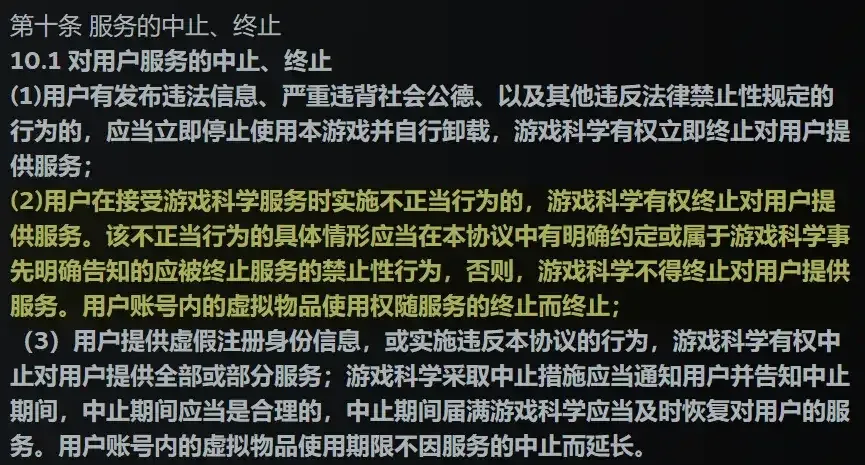
Since we’re using Black Myth: Wukong as an example, and Game Science has written a User Agreement that players must read and agree to before starting the game, what is Game Science’s stance?
It could be traditional legal advice, or it could be based on past experience making online games (copying the User Agreement from previous online games), or it could genuinely be the company’s own opinion. After reading Black Myth: Wukong’s User Agreement, I can only draw this conclusion:
Game Science opposes all trainers and MODs.
For example:
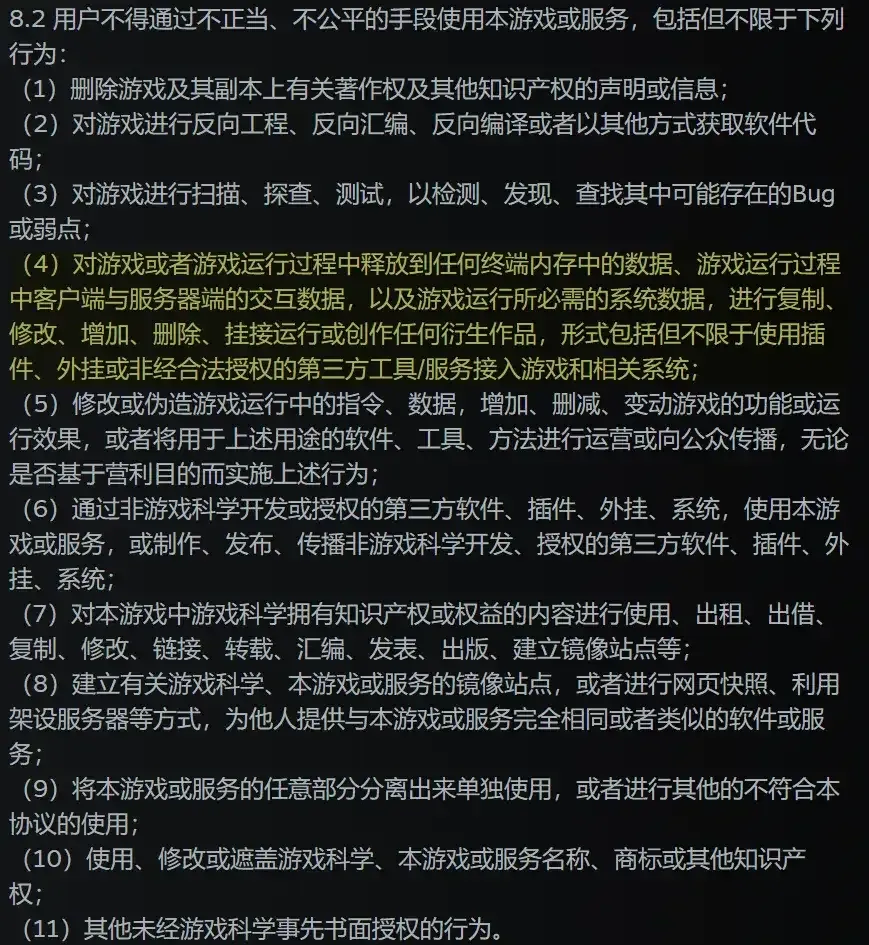
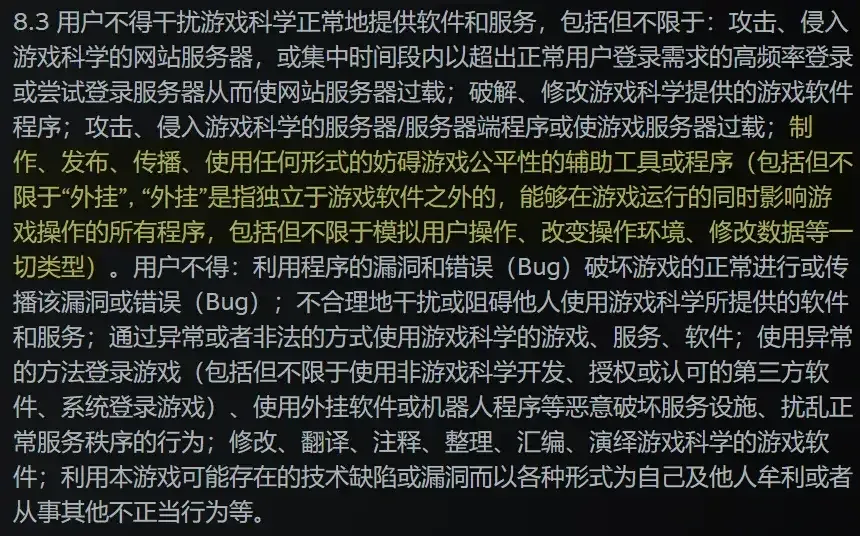
And the consequence of using a trainer is [account ban (service termination)]:
VI. Conclusion
In the traditional single-player game field, the vast majority of game companies do not believe that tools like trainers or MODs negatively affect the game. Some may even release official tools allowing enthusiasts to make modifications.
From a legal perspective, it is difficult to consider the capabilities of a trainer itself as infringing. Based on its principles, a single-player trainer is unlikely to be considered copyright infringement, unfair competition, or even destruction of computer information systems.
From a player’s perspective, you bought the game, you can’t beat it, you’re not allowed to modify it, you can’t get a refund, you can’t resell it, and you can only let the game gather dust — isn’t that another form of unfairness?
Considering that single-player games and online games are completely different, current “cheating” cases are all based on online games. If seeing “data modification” is directly deemed the “crime of destroying computer information systems” based on “precedents” without considering the actual situation, it would be nothing short of a “rigid understanding and application of the law.”
However, there are exceptions to everything. Even if it doesn’t constitute infringement, it may violate the User Agreement, constituting civil infringement (breach of contract).
Suffering or being banned — that is the question.
P.S.: The author is not using a trainer and has already reached the Yellow Wind Sage.