Guangzhou Officials Encourage Companies to Schedule Annual Leave During the 15th Games... Wait, Isn't Annual Leave Something Employees Apply For? What If Employees Don't Want to Take It?
An analysis of Guangzhou's notice on coordinating annual leave during the 15th National Games, examining the legal ownership of annual leave scheduling rights, citing court cases showing companies can arrange leave after considering employee preferences, with practical recommendations.
Recently, the Guangzhou Municipal Human Resources and Social Security Bureau issued the “Notice on Encouraging Flexible Work Arrangements and Paid Annual Leave During the Temporary Motor Vehicle Traffic Management Measures for the 15th National Games and the Paralympic Games in Guangzhou” (hereinafter referred to as the “Notice”).
The Notice states that to make way for the “15th Games” and alleviate traffic pressure, the government encourages companies to arrange for employees to take annual leave during the event period.
Bosses might see this as a golden opportunity to clear out their “annual leave inventory.”
But an employee’s first reaction might be:
Isn’t annual leave something “I” apply for and then take?
Can the company “coordinate” and arrange “my” leave?
Who really decides on annual leave?
Can the company “force me” to take it?
1. The 15th Games Are Coming — Commuting Will Be a Major Hassle
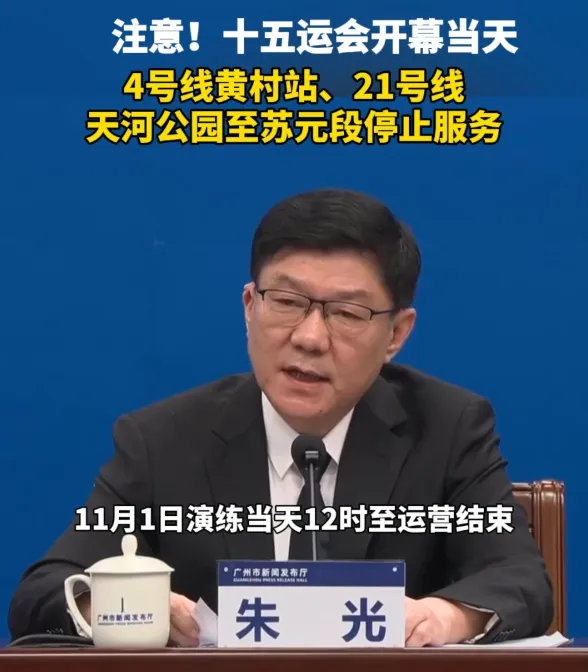
The Guangzhou 15th National Games and Paralympics are about to kick off. The authorities have implemented a series of measures to ensure the smooth running of the events, including odd-even license plate restrictions and metro suspensions:
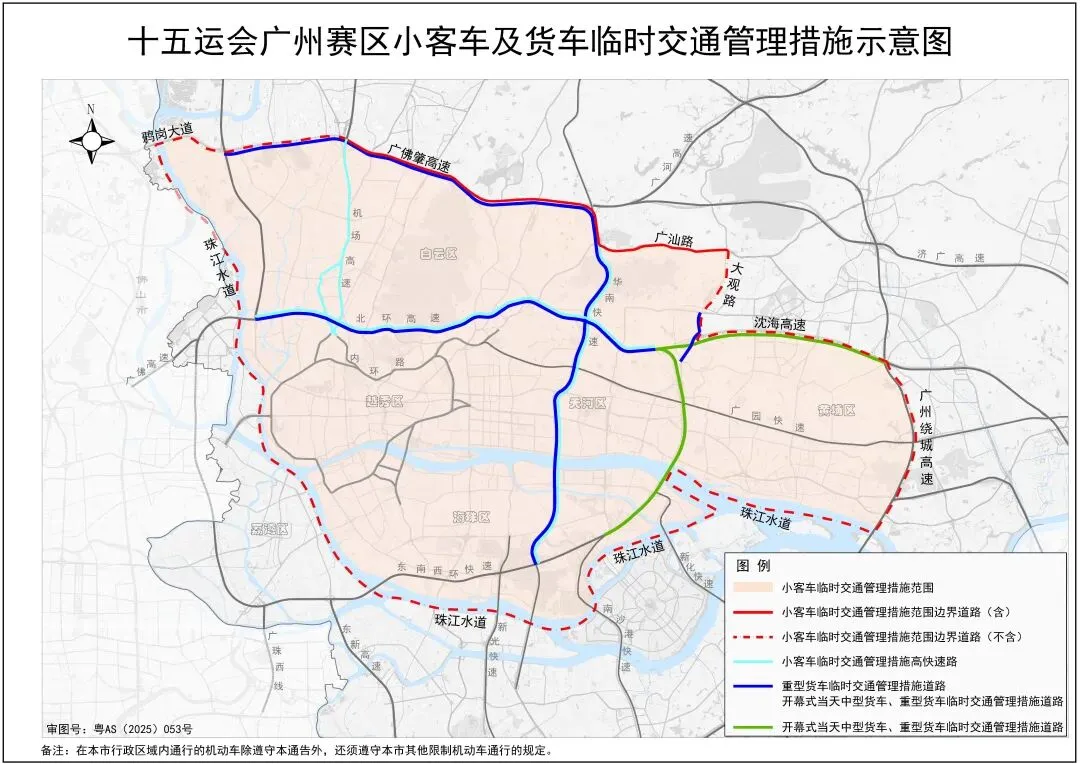
Electric scooter owners shouldn’t gloat either — the authorities are also cracking down on various violations by e-scooters:
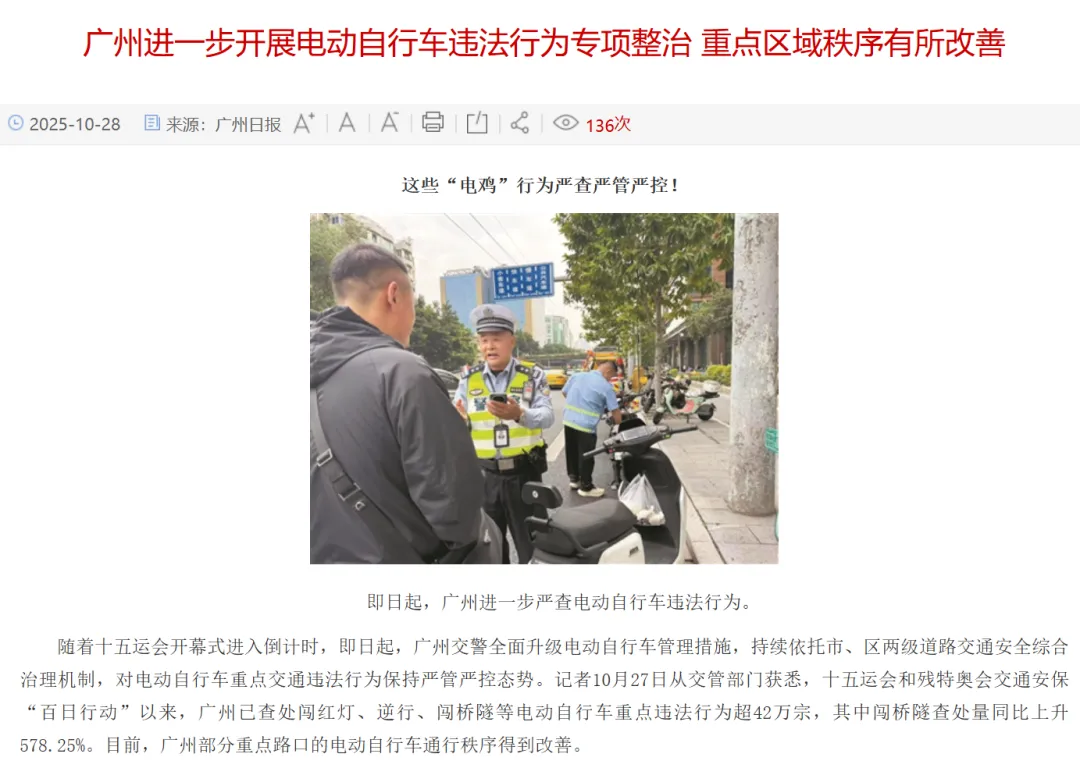
For employees who don’t normally use public transport, commuting over the next month or more will inevitably be affected.
Even if they switch to public transport, the increased crowds will make the commute even more painful.
Therefore, the Notice uses language like:
(Adopting flexible working hours, remote work, and other flexible methods, and coordinating paid annual leave for employees) is conducive to cooperating with the city’s overall traffic management and jointly maintaining good urban operational order. All relevant units and enterprises should attach great importance, actively respond, and take initiative.
to “suggest” that enterprises implement relevant plans.
Flexible working hours and remote work are conventional, but this time the “coordinated paid annual leave” measure was specifically highlighted.
Bosses may have mixed reactions — some may see it as a great chance to “clear out employee annual leave,” while others may not want to waste time on it given current urgent work plans.
But I’m sure most employees will be overwhelmingly negative about it.

Employees just want to keep their leave for when they really need it. Who wants to waste their precious annual leave for no reason?
2. Who Holds the Initiative on Annual Leave?
Many people’s first instinct is: “Of course it’s me! It’s my leave!”
This thinking is correct — but not entirely.
The specific rules on annual leave are set out in the “Regulations on Paid Annual Leave for Employees” and the “Measures for the Implementation of Paid Annual Leave for Enterprise Employees.”
The Regulations state:
Article 5: Employers shall, based on the specific circumstances of production and work, and taking into consideration the employee’s own wishes, coordinate and arrange the employee’s annual leave.
The Implementation Measures state:
Article 9: Employers shall, based on the specific circumstances of production and work, and taking into consideration the employee’s own wishes, coordinate and arrange annual leave.
Both regulations clearly state that the company has the right, after considering the employee’s wishes, to coordinate and arrange the employee’s leave.
The Implementation Measures also clarify:
Article 10: If an employer arranges for an employee to take annual leave, but the employee, for personal reasons and in writing, indicates they do not wish to take it, the employer need only pay the employee their normal working period wages.
Thus, the entity that arranges annual leave is actually the company. The company can approve or deny leave not only based on the employee’s wishes but also based on the specific circumstances of production and work. It can also arrange for employees to take leave at certain times.
Employees certainly have the right to object, but the objection must have practical significance.
Simply saying “I want to save my leave for a holiday trip” may not necessarily be recognized or supported.
3. Some Local Guangzhou Cases
(2019) Yue 0106 Min Chu No. 40225, 41420
In this case, after resigning, the employee demanded payment for unused annual leave from June 14, 2017, to July 9, 2019.
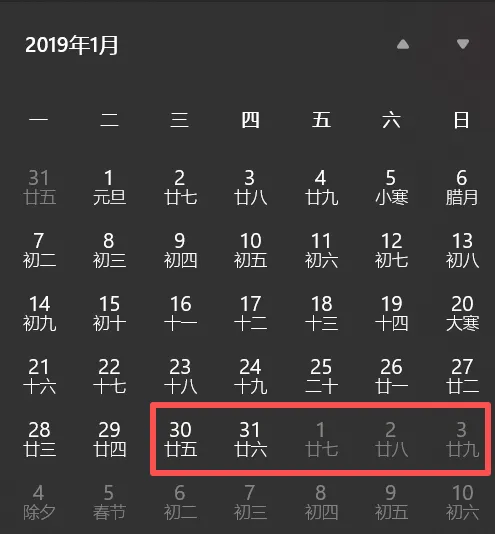
The company argued in court that it had already arranged annual leave during the 2019 Spring Festival (January 30 to February 3, 2019). It submitted WeChat records showing that on December 23, 2018, the HR department issued a “Notice on Company Annual Party and Spring Festival Holiday”: “…3. According to annual leave policy, employees who have completed one year of service will be uniformly arranged to take 5 days of paid annual leave: January 30 - February 3.” The employee replied “Received” in the group chat.
The court held that the company had issued a uniform notice arranging 5 days of annual leave, and the employee replied “Received” in the group. From their WeChat conversations regarding course arrangements, job transfers, etc., it was clear that all work arrangements were communicated via WeChat. If the company had new arrangements requiring the employee to work during the uniform annual leave period, there would have been new WeChat notifications. However, the employee had no evidence that the company changed its mind after arranging the leave or that the employee objected to any new arrangement. The court accepted the company’s claim that it had uniformly arranged annual leave and did not need to pay compensation for unused leave.
Analysis:
In this case, the annual leave was attached to the Spring Festival — a practice also adopted by many gaming companies. The judgment shows that the company does have the right to arrange the specific timing of annual leave by issuing a public notice.
When the employee confirms or raises no objection, they are deemed to have accepted the arrangement. Subsequently, the employee cannot demand compensation for unused annual leave on the grounds that “the company didn’t give me annual leave.”
(2024) Yue 0113 Min Chu No. 7256
The facts of this case are similar to the above, but the outcome was completely opposite.
The plaintiff, Company A, claimed that its “Compensation System” stated it would arrange consecutive annual leave and Spring Festival holidays. However, according to the Spring Festival holiday notices for 2023 and 2024 submitted by Company A, the notices did not clearly inform employees that the arranged Spring Festival holiday included annual leave, nor did it specify the corresponding year and number of days. Therefore, it was insufficient to establish that the days beyond the statutory holidays in the Spring Festival arrangement were for Defendant Wang’s 2023 and 2024 annual leave.
As for the portion beyond Company A’s arranged Spring Festival holiday, although Defendant Wang was also absent from work, Company A failed to prove that Defendant Wang had applied for annual leave in 2023 or 2024 and thus bore the adverse consequences of insufficient evidence. Based on Defendant Wang’s attendance records, the court accepted that this portion was highly likely to be compensatory time off for overtime worked on rest days. Therefore, Company A was ordered to pay the difference in unpaid annual leave compensation.
Analysis:
In this case, the company also arranged consecutive annual leave and Spring Festival holidays — in fact, for at least two consecutive years. Unfortunately, the company did not explicitly state in the holiday notice that this was “use of annual leave.” Ultimately, the court deemed it company welfare leave, forcing the company to pay additional compensation for unused annual leave upon the employee’s resignation.
4. What Can Companies and Employees Do?
Companies
If a company wants to respond to the official call and use employee annual leave during the 15th Games period, it is recommended (essential) to specify in the “Holiday Notice” the reason for the arrangement (the “15th Games”) and that this leave constitutes use of annual leave.
If the enterprise IM platform has a “read receipt” feature, that’s ideal. If not, it’s recommended to have HR or department heads notify each employee individually to ensure there is proof of “notification received and employee acknowledgment.”
If the company chooses not to follow the official call and cannot implement remote work or flexible hours, it’s advisable to relax attendance management during this month. For employees affected by traffic restrictions, require them to report in advance, verify the situation, and appropriately grant some commuting flexibility to avoid being overly “inhumane.”
Employees
For employees, if the company insists on using annual leave for time off, it’s indeed difficult to find a “reasonable” reason to override the company’s decision.
But if you really object, consider submitting your objection in writing — at least as a record.
(Though if everyone else is off, it’s hard to justify being alone in the office.)
After reading this article, I’m sure you’ve also learned to pay attention to whether the company’s “Holiday Notice” uses precise language.
Consider saving the company’s imprecise “Holiday Notice” as evidence.
5. Finally
The “15th Games” is a grand event for all of Guangzhou and depends on everyone’s support.
If you can respond to the call, it’s appropriate to do so.