If You Make Money with MiniMax H3, Do You Owe MiniMax a Cut? What About Other Open Models?
A close look at the MiniMax H3 open-weight license, including copyright, revenue sharing, the US$20 million authorization threshold, territorial restrictions, prohibited uses, and how it compares with Kimi K3, GLM 5.2, DeepSeek V4, and the soon-to-be-released Qwen 3.8.
MiniMax has finally open-sourced its latest video-generation model, H3.
Open source, free, a community ecosystem—and it can apparently run on a mid-range home computer without sacrificing much quality.
Many people’s first reaction was:
Finally, no more waiting in SD queues!
Now I can roll the gacha at home and churn out ads and short-form dramas.
“Hello, million-yuan annual income!”
So now it is time for a fantasy hypothetical:
Suppose I deploy H3 on my own computer, use it to generate advertising videos for clients, and eventually make RMB 1 million.
The GPU is mine. The electricity bill is mine. I never call MiniMax’s API.
Then:
Do “I” own the copyright in those works?
Is all that income “mine”?
Do I have to give MiniMax an additional cut?
* This article reflects only the author’s personal views and does not constitute legal advice.
I. If I Make RMB 1 Million, How Much Can MiniMax Take?
In the grant-of-rights section of the MiniMax H3 License, MiniMax uses one very reassuring term:
Royalty-Free.
As long as users stay within the territories covered by the license and comply with its other restrictions, they may run MiniMax H3, provide services to others, modify the model, and even create derivative models.
The license does not say, “Pay MiniMax for every video generated.” Nor does it copy Unreal Engine’s approach of stating that a percentage becomes payable once revenue crosses a specified threshold.
Therefore, if a user merely deploys H3 locally in China and makes RMB 1 million by producing videos for themselves or their clients, MiniMax does not take a share of that revenue under the currently published license.
The license even expressly states that MiniMax claims no rights over users’ Outputs.
So you can safely deliver the work without worrying that MiniMax will turn up and interfere with the output.
That does not, however, mean that a purely AI-generated video automatically enjoys copyright protection.
Until China’s Copyright Law is amended—or the rumored Artificial Intelligence Law actually materializes—the copyright status of such works will still depend on how the competing positions ultimately play out.
Whatever happens, when working with a third party, remember to specify copyright ownership in the contract.
The law may lag behind technology, but a contract can plan ahead.
II. More Than US$20 Million? Let’s Talk
MiniMax H3 may be used commercially, but commercial use is not unlimited.
MiniMax’s “if you strike it rich” line is US$20 million in annual revenue.
If commercial products and services using H3 generate more than US$20 million in yearly revenue, the user must contact MiniMax in advance and obtain separate written authorization.
That “separate authorization” might remain free. It might involve a fixed license fee, revenue sharing, or other conditions. MiniMax even states expressly that it has no obligation to grant another license.
More subtly, the license does not explain how the US$20 million should be calculated:
Does it mean gross revenue or net revenue?
Must multiple H3-based product lines—some profitable and some loss-making—be aggregated?
If H3 provides only one minor feature in a product, does the product’s entire revenue still count?
The terms do not answer any of these questions directly.
The model has only been open for a few days, so presumably nobody has already generated US$20 million from it (right?). Planning the business model in advance—including how revenue will be calculated—may be a fine way to pass the time while your GPU screams its way through another video.
III. Are Users in the US, UK, EU, and South Korea Violating the MiniMax H3 License?
While reading the MiniMax H3 open-weight license, I found one provision that was hard not to laugh at:
H3’s open license covers the world—but expressly excludes the United States, the European Union, the United Kingdom, and South Korea.
Local deployment, operation, modification, and distribution of H3 in those places require a separate license.
Even **Outputs and results generated by H3 and its derivative models—in other words, the AI videos themselves—**may not be used, reproduced, distributed, or displayed in those territories.
Considering that I read this license on Hugging Face—a company founded by three Frenchmen in the United States—used an inference workflow built for ComfyUI, which is headquartered in San Francisco in the United States, and read overseas users discussing it on Reddit, also headquartered in San Francisco in the United States…
There may already be quite a few users breaching the license.
MiniMax does explain in its official license Q&A that the official H3 API can remain globally available because MiniMax controls the servers and safety measures. Once open weights are handed to users, however, MiniMax can no longer maintain the same level of compliance control.
So it adopted a blanket exclusion.
Fair enough. From MiniMax’s perspective, it is a reasonable way to avoid risk.
But if you plan to build an H3-based SaaS, connect H3 to a globally available website, let users in the US, EU, UK, or South Korea generate videos, deliver generated results to customers in those places, or even upload the videos to TikTok or YouTube, you may be going beyond the scope of H3’s public license.
So any one-person company—or larger enterprise—with such plans and a genuine desire to get compliance right should consider emailing MiniMax first and negotiating a separate license.
The license also says that anyone offering H3 capabilities to third parties must bind users to restrictions at least as protective as the H3 license and establish content-safety measures, reporting channels, and violation-handling mechanisms. Publicly released H3-generated content must also be clearly disclosed as AI-generated. Individual creators are encouraged to state “Powered by MiniMax H3,” while commercial use must display “MiniMax H3.”
So while enthusiastically uploading your videos, remember to do the compliance work too.
IV. Other Models Have Different Rules
Every provider has its own rules. Some models really are close to what people imagine as “download it and use it commercially.” Others may require a separate revenue share.
The Actually-Free Camp
For example, GLM 5.2 and DeepSeek V4 currently use the MIT License. As long as the copyright and license notices are retained, they may generally be deployed, modified, distributed, and incorporated into paid products without a revenue threshold or revenue-sharing clause.
The Explicit Revenue-Sharing Camp
Kimi K3 sets out commercial terms directly: if a user adopts a Model-as-a-Service business model and aggregate revenue exceeds US$20 million over any consecutive twelve-month period, a separate agreement is required. Online rumors suggest that the revenue share may be as high as 30%.
In addition, any relevant commercial product with more than 100 million monthly active users or more than US$20 million in monthly revenue must prominently display “Kimi K3” on its user interface.
As for Qwen 3.8, its weights and LICENSE had not yet been officially released when this article was published. Soon. Very soon.
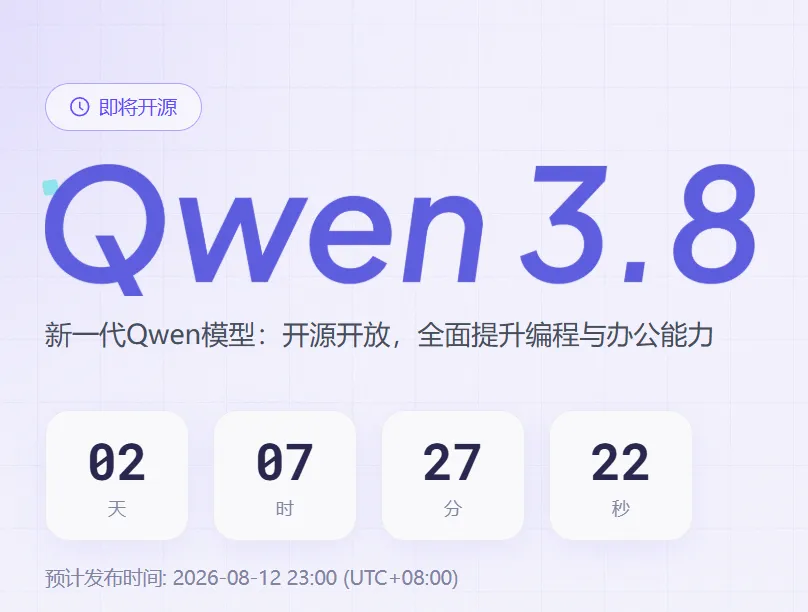
Media reports have nevertheless suggested that Alibaba may follow KIMI’s lead and begin planning an “excess-revenue-sharing” mechanism.
Given that many video models use Qwen’s vision-language capabilities as their image encoder, if Qwen 3.8 really adopts revenue sharing, will the next generation of video models have to pay two separate cuts?
I can hardly wait.
V. Finally: MiniMax H3 Cannot Be Used to Make Legal-Education Videos?!
I also tried a local H3 deployment. Compared with last year’s Wan, it is indeed much more fun to play with.
But while reading the license closely, I noticed that the prohibited-use section at the very bottom includes this:
“Use to engage in any unauthorized or unlicensed professional activity, including but not limited to financial, legal, medical or healthcare, or other professional practice.”
In other words, H3 may not be used to carry out any unauthorized or unlicensed professional activity, including financial activity, legal professional activity, medical or healthcare activity, or other professional practice.
My world just collapsed!
But does “legal professional activity” include public legal education?
I feel the answer is still:
“Try it first and worry about the rest later.”