Training Model or Illegal Surveying? Pokemon GO! Players Are 'Helping' Build 'Centimeter-Level Precision Models'
Niantic's Large Geospatial Model (LGM) built from Pokemon GO player scan data raises serious legal concerns under Chinese surveying, data security, and counter-espionage laws.
Recently, game company Niantic published a technical blog post detailing its development of a Large Geospatial Model (LGM).
The scale, scope, and novel use of data in this plan have sparked heated discussion in both the gaming and legal communities.
As a company primarily focused on game development, Niantic’s behavior of collecting geospatial data through its game products and scanning applications may have exceeded reasonable bounds, even touching upon prohibited areas under relevant Chinese laws and regulations.
This article represents only the author’s personal views and should not be considered legal advice or opinion.
I. Background
Niantic is known for its location-based service games, the most representative of which is Pokemon GO!, which has long been popular worldwide.
According to statistics from http://activeplayer.io, this game, which has been operating for over 8 years, has a daily peak of up to 24 million online players, with monthly active users reaching a staggering 90 million.

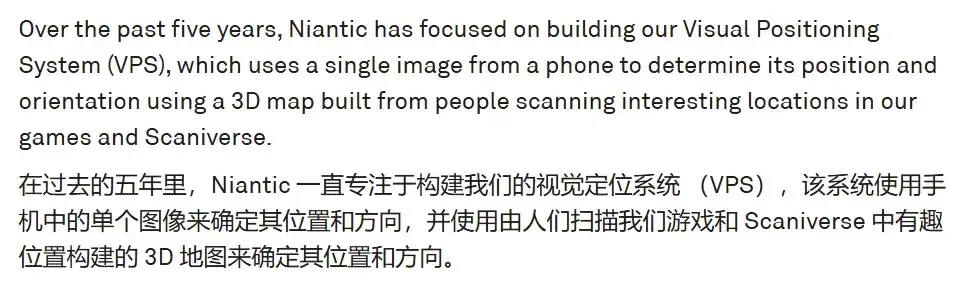
According to Niantic’s recently published technical blog post, the company is building a Large Geospatial Model (LGM). The data collection channels for this model primarily come from its applications and games, including 3D scanning software Scaniverse as well as scene scanning activities by users of Pokemon GO!, Ingress, and others worldwide.
 Pokemon GO! issues AR scanning tasks for players to scan certain landmarks
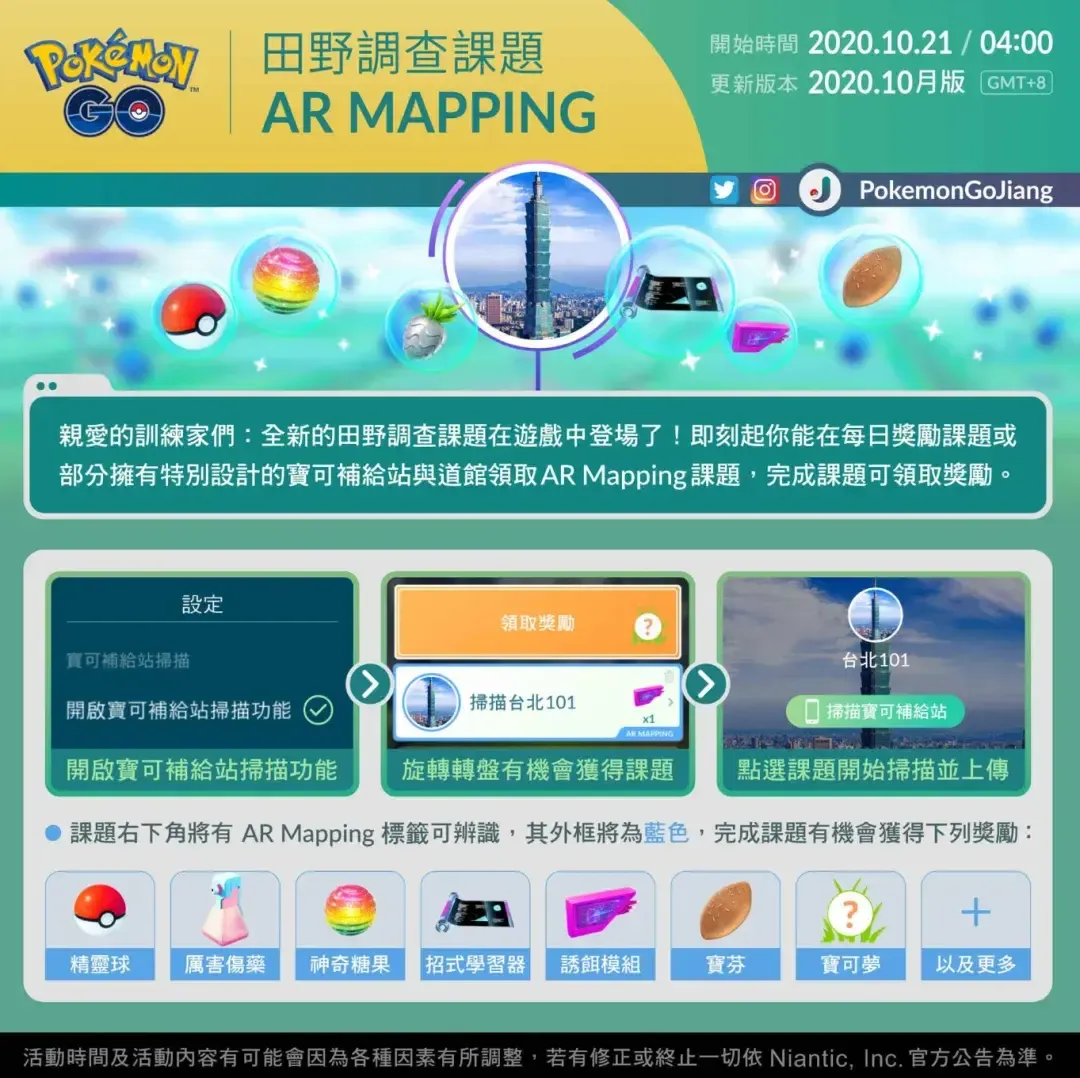 Pokemon GO! issues AR scanning tasks for players to scan certain landmarks
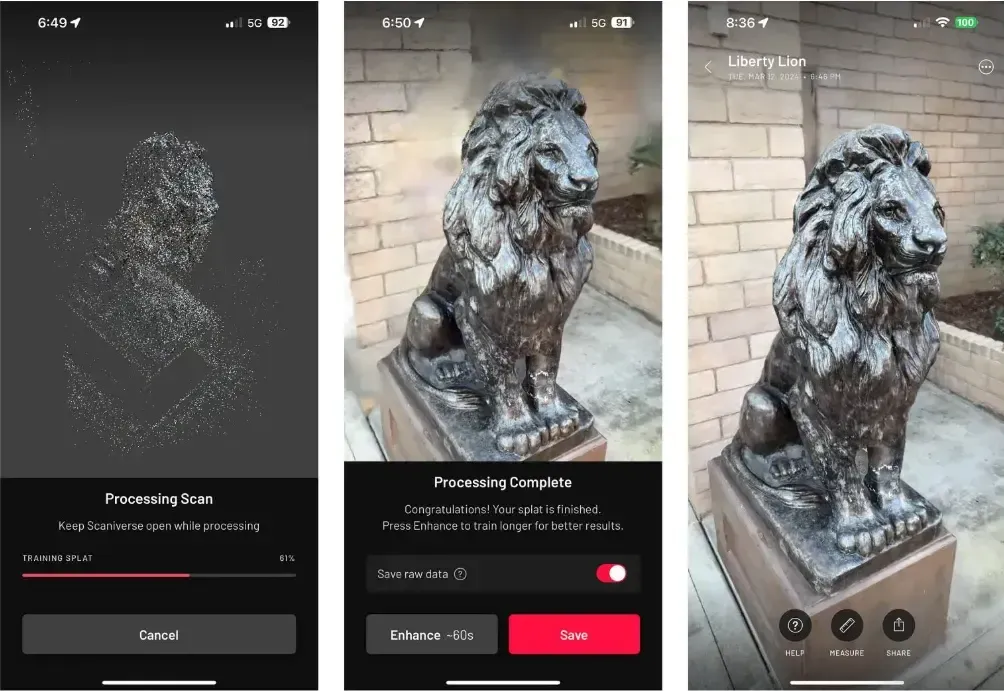 Scaniverse
According to Niantic’s report, it has acquired data from 10 million scan locations worldwide, growing at approximately 1 million user scans per week, with each scan containing hundreds of discrete images. Based on this data, the company has trained over 50 million neural networks with more than 150 trillion parameters, establishing a visual positioning system covering over 1 million locations.
One point worth noting in the report: although various Niantic games and software, such as Pokemon GO!, are “region-locked” in mainland China, the global distribution map of survey points published by Niantic shows that certain areas of mainland China (mainly concentrated in Beijing, the Yangtze River Delta, and Guangdong) still appear within their data coverage.
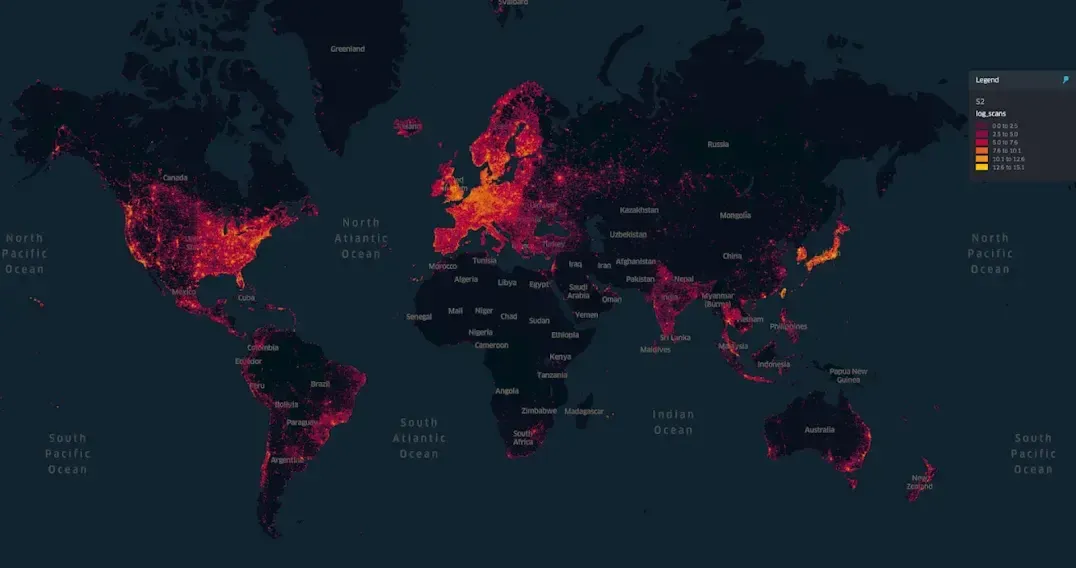
According to the report, these data sources have a significant particularity: they are primarily collected by users from a pedestrian perspective, covering areas that are difficult for traditional survey vehicles to access. Through neural network technology, these scattered image data are compressed and encoded, ultimately forming a positioning system accurate to the centimeter level.

LGM can not only perceive and understand physical space but also interact with these spaces in new ways, becoming a key component in fields such as AR glasses, robotics, content creation, and autonomous systems.
Sounds very Coooooool~
But it also seems highly illegal.
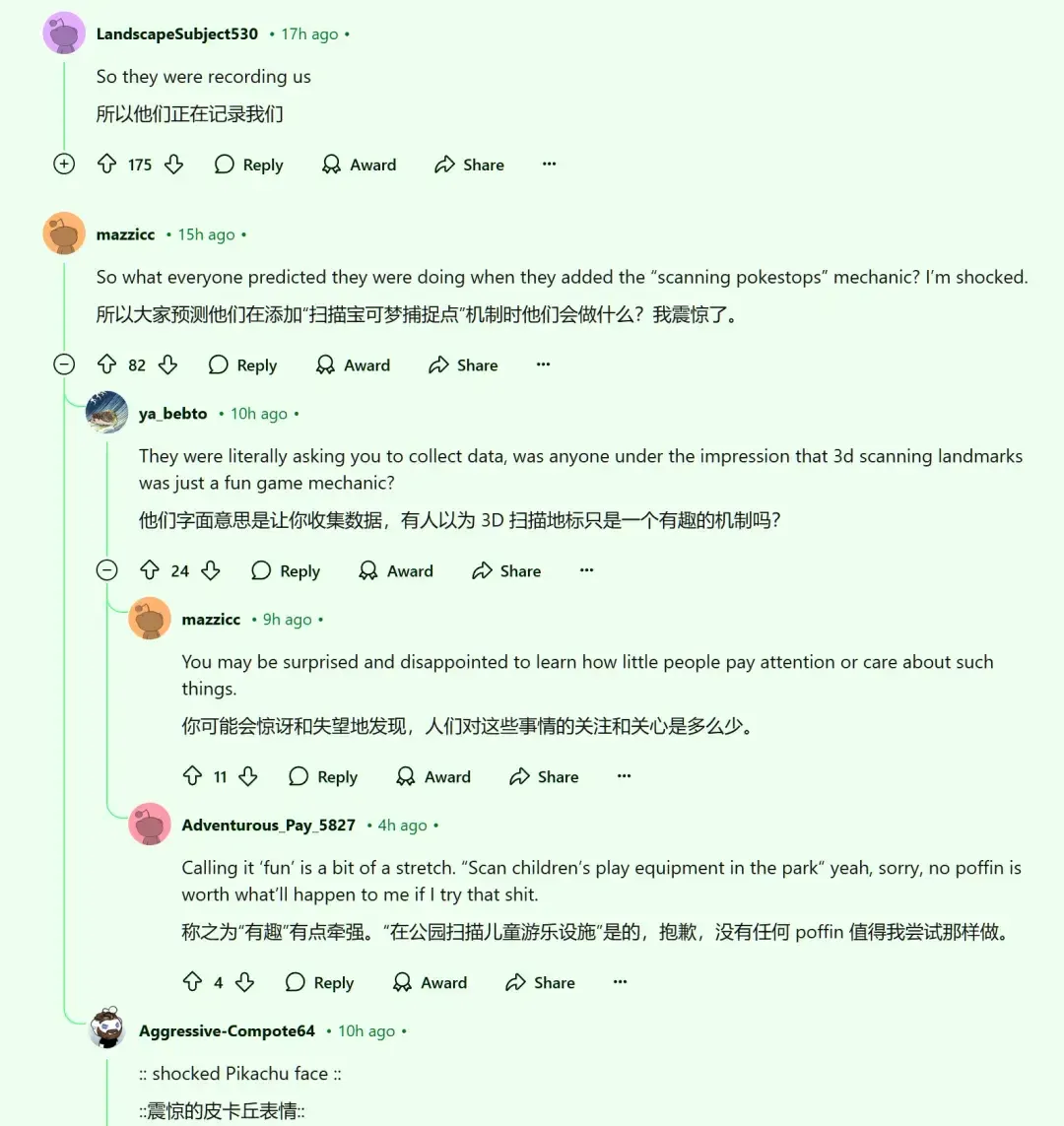
Even overseas users feel uneasy.
II. Legal Analysis of Niantic’s Data Collection Behavior
Although Niantic’s currently disclosed technical direction involves building spatial models using large amounts of raw data anchored to precise locations on Earth (such as billions of images), thereby endowing the model with “spatial understanding” capabilities including buildings and objects, achieving location-based understanding of space, structure, and physical interaction.
It is clear that Niantic is leveraging its users, including a large number of Pokemon GO! players, to conduct surveying activities. This surveying may have started as early as five years ago, with a large number of players unwittingly providing a massive amount of survey data.
Although Pokemon GO! does not operate in mainland China, the author still wishes to provide a brief legal analysis of this behavior based on domestic laws and regulations:
Risks under the Surveying and Mapping Law
Article 2: Surveying and mapping activities conducted within the territory of the People’s Republic of China and other sea areas under the jurisdiction of the People’s Republic of China shall comply with this Law.
Surveying and mapping as referred to in this Law means the activities of determining, collecting, expressing the shape, size, spatial position and attributes of natural geographical elements or surface artificial structures, as well as processing and providing the data, information, and results obtained. Surveying and Mapping Law
Article 8: Foreign organizations or individuals conducting surveying and mapping activities within the territory of the People’s Republic of China and other sea areas under its jurisdiction shall obtain approval from the competent department of surveying and mapping geographic information of the State Council in conjunction with the military surveying and mapping department, and shall comply with the relevant laws and administrative regulations of the People’s Republic of China.
Foreign organizations or individuals conducting surveying and mapping activities within the territory of the People’s Republic of China shall cooperate with relevant departments or units of the People’s Republic of China, and shall not involve state secrets or endanger national security. Surveying and Mapping Law
According to Article 2 of the Surveying and Mapping Law of the People’s Republic of China, the geospatial data collected by Niantic through its applications, from a legal definition perspective, has already constituted the substantive elements of surveying and mapping activities.
According to Article 8, foreign organizations or individuals conducting surveying and mapping activities within the territory of the People’s Republic of China shall obtain approval from the competent department of surveying and mapping geographic information of the State Council in conjunction with the military surveying and mapping department, and must cooperate with relevant domestic departments or units.
Niantic’s large-scale, high-precision collection of geographic, architectural, and object information, carried out under the guise of game interaction and rapid modeling, constitutes illegal surveying activities without obtaining approval from relevant authorities.
Risks under the Data Security Law
Article 21: The state establishes a data classification and分级 protection system, implementing classified and分级 protection for data based on its importance in economic and social development, and the degree of harm to national security, public interests, or the legitimate rights and interests of individuals and organizations once it is tampered with, destroyed, leaked, or illegally obtained or used. The national data security work coordination mechanism coordinates relevant departments to formulate important data catalogs and strengthen the protection of important data.
Data concerning national security, the lifeline of the national economy, important people’s livelihoods, and major public interests constitute national core data and are subject to stricter management systems.
All regions and departments shall, in accordance with the data classification and分级 protection system, determine specific catalogs of important data in their regions, departments, and related industries and fields, and provide key protection for data included in the catalogs.
Data Security Law
Article 4: Data processors who provide data abroad, under any of the following circumstances, shall declare a data出境安全 assessment to the national cyberspace administration through the provincial cyberspace administration at their location:
(I) Data processors providing important data abroad; (II) Critical information infrastructure operators and data processors processing personal information of more than 1 million people providing personal information abroad; (III) Data processors who have accumulatively provided personal information of 100,000 people or sensitive personal information of 10,000 people abroad since January 1 of the previous year; (IV) Other circumstances requiring declaration of data出境安全 assessment as stipulated by the national cyberspace administration.
Measures for Data出境安全 Assessment
Surveying and mapping data, as high-density data concerning national security, must obtain approval from relevant state authorities before being transferred abroad. However, Niantic’s collection activities within China have clearly not obtained such approval.
Risks under the Counter-Espionage Law and Criminal Law
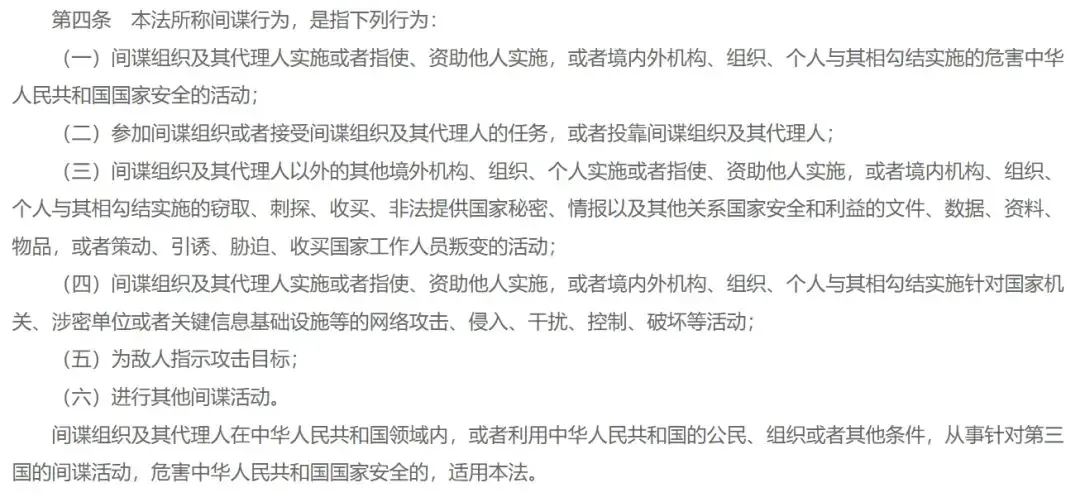
During the Zhuhai Airshow a few days earlier, a man climbed over a fence and used a high-precision 3D scanner to survey and model exhibited weapons and equipment. This behavior attracted high attention from law enforcement, who took the man away for investigation. This case fully demonstrates that unauthorized scanning and modeling of specific areas or facilities may constitute serious legal risks.

Domestic users’ behavior of providing surveying and modeling data while using Pokemon GO! and other Niantic software may inadvertently violate relevant legal provisions.
Article 111: [Crime of Stealing, Spying, Buying, or Illegally Providing State Secrets or Intelligence for Overseas Entities] Anyone who steals, spies, buys, or illegally provides state secrets or intelligence for overseas institutions, organizations, or personnel shall be sentenced to fixed-term imprisonment of not less than five years but not more than ten years; if the circumstances are especially serious, the sentence shall be fixed-term imprisonment of not less than ten years or life imprisonment; if the circumstances are relatively minor, the sentence shall be fixed-term imprisonment of not more than five years, criminal detention, public surveillance, or deprivation of political rights. Criminal Law
III. Risk Prevention Recommendations
Currently, with the rapid development of artificial intelligence technology, the collection and application of geospatial data are showing new trends. Although China maintains a strict approval attitude toward LBS AR games, it is expected that more enterprises will conduct various information collection activities through other application carriers such as visual AI models and spatial computing platforms.
Regarding the legal risks exposed by Niantic, the author offers the following recommendations:
Enterprise Compliance Recommendations
In terms of enterprise compliance, if you plan to develop LBS AR games, you can basically abandon this idea.
As early as early 2017, the Game Publishing Committee cited opinions from the General Administration of Radio and Television:
Out of high responsibility for national security and the safety of people’s lives and property, the competent business department of the Administration is currently coordinating with relevant state departments to organize and conduct security assessments. Once an assessment opinion is formed, it will be announced to the public in a timely manner. Prior to this, the Administration temporarily does not accept or approve this type of game, and recommends that domestic game companies carefully consider when developing,引进, or operating this type of game.
Since 2017, only Tencent’s Catch the Monster (2019) has received an approved ISBN for an LBS AR game, and Tencent Group has surveying qualifications.
Based on the above situation, for other small and medium-sized game companies, the practical operability of attempting to enter this field is extremely low. It is recommended to carefully consider related investments to avoid resource waste.
If a company’s project involves AI model training and requires collecting various types of model data, the following matters should be noted:
-
Avoid collecting geographical location information, focusing only on data content directly related to model training.
-
Establish a strict sensitive data screening mechanism to promptly clean up accidentally collected or irrelevant data.
-
Implement data classification and protection measures to ensure data security and avoid legal and compliance risks caused by data leakage.
-
Review the output results of the model to prevent the generation and dissemination of inappropriate content and reduce potential legal risks.
User Risk Prevention Recommendations
When using applications with geographic information collection functions, ordinary users should always maintain sufficient vigilance. Especially in sensitive areas or locations involving national security, they must strictly comply with relevant legal provisions and avoid any form of scanning or photography activities.
When using AR applications, 3D scanning software, and AI visual models, users should develop the habit of carefully reading relevant agreements, understanding the purpose of data use and the information of the enterprise collecting data, and confirming that the application is compliant and the data destination is standardized.
For applications that require uploading data to overseas servers, special caution should be exercised. It is best to avoid using “region-locked” applications or forcibly突破 network restrictions to use overseas applications, so as not to violate regulations on data出境 due to improper data flow.
In addition, during personal photography or scanning, attention should be paid to complying with public place management regulations and personal privacy protection laws. Especially when involving the rights of others, necessary authorization or permission should be obtained in advance to avoid disputes or legal liability arising from unauthorized operations.
Regulatory Recommendations
With the rapid development of artificial intelligence technology, especially the high dependence of AI model training on large-scale data, the existing legal and regulatory system faces many “gray” or even “blank” areas that urgently need targeted improvement. Regulatory authorities should accelerate the construction of a legal framework suitable for the characteristics of AI technology, clearly defining compliance requirements for AI model training, dataset use, and related applications.
In terms of data security, specific rules need to be formulated to regulate the entire process of data collection, processing, and storage, preventing the misuse or leakage of sensitive and important information. In terms of privacy protection, data protection and personal information protection mechanisms should be further strengthened, strictly limiting unauthorized data collection and use. For technologies and data involving national security, a special review mechanism should be established to ensure data security and controllability.
In addition, regulatory agencies should implement graded supervision over the development and deployment of AI technology, formulating differentiated regulatory strategies based on technology用途, data types, and application scenarios. By establishing clear compliance guidelines, enterprises can be helped to avoid legal risks when developing, training, and applying AI models, while strengthening public education to enhance users’ right to know and participate in the use of AI technology.
IV. Final Thoughts
Against the trend of deep integration of artificial intelligence and geographic information technology, while pursuing technological innovation, enterprises must pay more attention to legal compliance. The balance between the two has become a core proposition for industry development. Whether it is traditional LBS AR applications or cutting-edge AI visual models and even AI spatial models, they must be premised on strict compliance with laws and regulations, with the protection of public interests and data security as the bottom line of responsibility.
At the same time, individual users also need to raise their data security awareness, use relevant applications prudently, proactively understand and comply with relevant legal provisions, especially when involving sensitive areas and information. Only through the joint efforts of all parties can we promote the healthy and sustainable development of geographic information technology and artificial intelligence on the basis of ensuring national security and social order, creating more value for society.