"Delta Force" Streamer Live-Destroyed a Viewer's Account—Not Just Civil Damages, but Possible Criminal Charges?
Analyzes the legal liability of a Delta Force streamer who live-streamed the destruction of a viewer's rare in-game items, covering infringement determination, virtual property valuation methods, and the criminal threshold for intentional destruction of property.
In the game streaming world, there have always been “viewer perks” as routine operations for streamers to retain fans and create content.
In competitive games, “scan-to-login” can simultaneously achieve the skill-showcasing effect of “smurfing” and help top donors/navy captains “rank up,” making it a favorite among streamers.
But recently, in Bilibili’s Delta Force section, a drama unfolded that made everyone’s blood boil.
A “long-time captain” with a level 20+ fan badge, wanting to help his favorite streamer Qingyu Tpor enjoy the game, specially equipped six sets of top-tier gear and scanned the code to join.
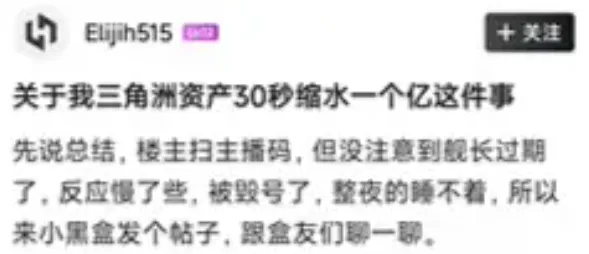
But he didn’t notice that his captain status had expired just an hour earlier (some netizens say it was only “one minute past expiration”).
After logging in, the streamer noticed the viewer was no longer a “current captain.” Ignoring the owner’s desperate pleas in the chat—“I’m a captain, I just expired, I’ll renew immediately”—the streamer “expertly” selected the valuable equipment items from the account and moved the mouse to the “sell” button.
Then he gave a so-called “10-second countdown,” threatening to click if the owner didn’t log back in in time.
But whether “knowingly” or “intentionally,” the stream had a built-in 10-second delay.
So when the account owner heard the warning and immediately tried to log back into WeGame to force-login and save his property, the various limited-edition gear and high-level supplies had already been turned to ashes along with the sound of the streamer selling equipment.
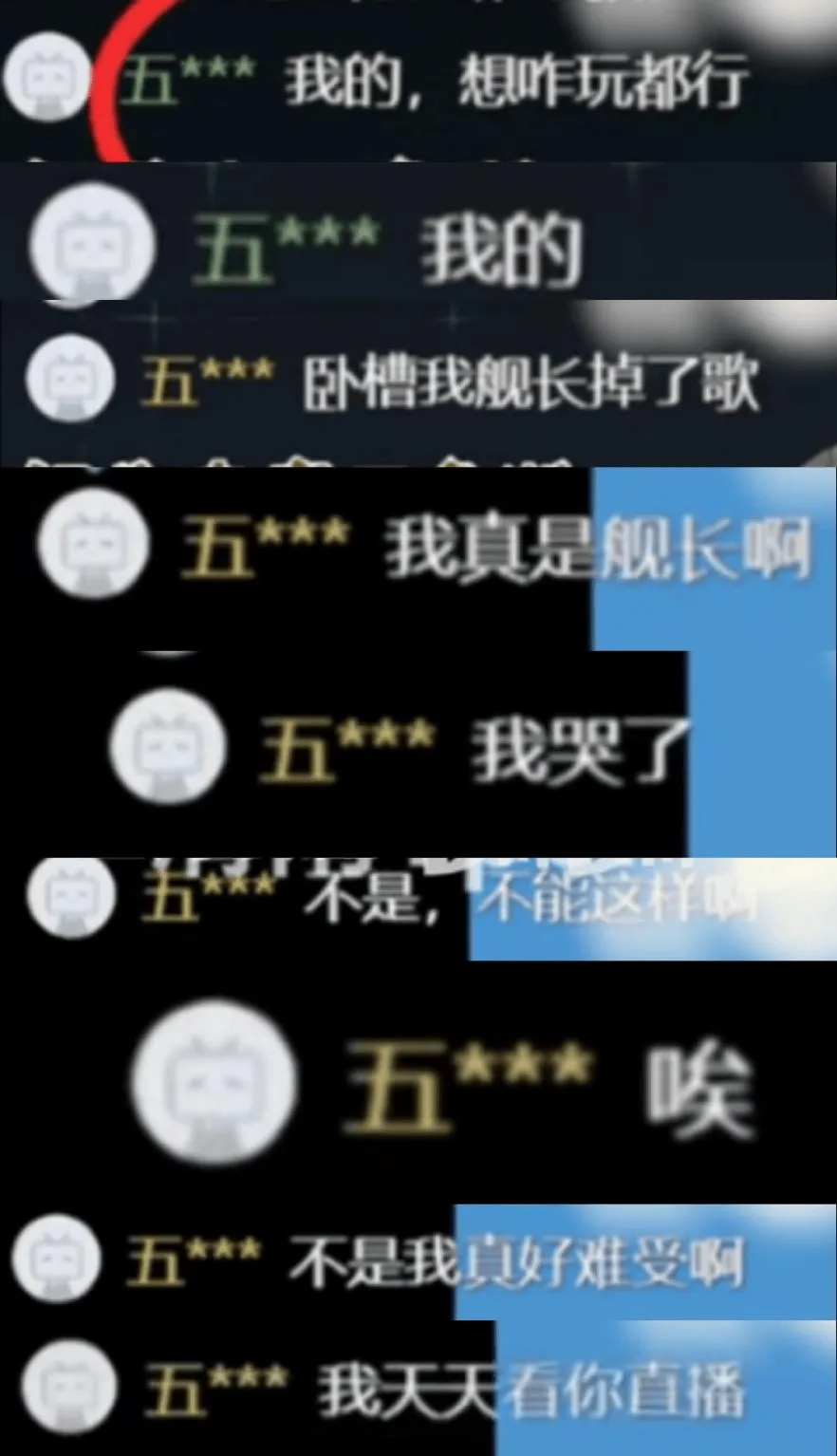
(Still had captain-colored ID when scanning; dropped after logging in)
Afterward, the owner couldn’t sleep all night, falling into self-blame.
But the streamer arrogantly posted a “no-apology statement,” claiming the player said “do whatever you want,” which he construed as explicit authorization, and that he had “no fault whatsoever.”

Even boasting:

Today, let’s discuss:
What legal liability does a streamer face for maliciously destroying a player’s account for the sake of so-called “rules” and “content effect”?
*This article reflects only the author’s personal views and is not intended as legal advice.
1. “Do Whatever You Want” = “Destroy Whatever You Want”?
In this incident, the streamer and some of his fans’ core “defense” argument was:
“Didn’t you check your captain badge before scanning?”
“Didn’t you read the rules?”
“Would I have destroyed your account if you hadn’t scanned?”
“You said ‘do whatever you want’—so what’s wrong with deleting it?”


Classic “bait and switch.”
In legal practice, this is clearly “exceeding authorized authority.”
From a civil legal relationship perspective, when a player scans to authorize a streamer to log in, the two parties form a gratuitous entrustment contract or borrowing relationship.
The specific scope of authorized use must be judged based on actual circumstances and reasonableness.
In the gaming context, “do whatever you want” clearly means using the account to experience the game’s core mechanics.
For example, the streamer could use the owner’s top-tier gear to play matches, shoot, explore the map, or even drop their gear by dying due to poor skill—all of these are normal risks of “playing.”
But “playing” definitely does not include “throwing high-value property into the trash to destroy it.”
Put simply: Li Si lends his car to Zhang San and says, “Bro, drive it however you want.”
Then Zhang San drives the car to a scrapyard, starts a livestream, and while the audience spams “666,” has the car crushed into scrap metal.
When the police show up, Zhang San pulls out a chat record and says, “Officer, see? He explicitly authorized me to ‘drive it however I want.’ This is normal use. It’s his fault for not keeping an eye on his car.”
“If he hadn’t lent me the car, could I have destroyed it?”
Isn’t that ridiculous?
Article 929 of the Civil Code of the People’s Republic of China:
In a gratuitous entrustment contract, if the agent causes loss to the principal due to intentional act or gross negligence, the principal may claim compensation for the loss.
If the agent exceeds authority and causes loss to the principal, compensation shall be paid.
In this incident, the streamer used the convenience of account access to actively sell and destroy the player’s rare equipment—this is 100% intentional infringement beyond authorized scope.
2. Does “The Player Violated the Rules First” Grant Immunity?
Some “in-the-know” netizens raised a trickier angle: “Major game EULAs already explicitly prohibit account sharing, lending, and boosting. The owner’s scanning for boosting was itself a violation. Even if the account got banned, it would be reasonable. Would the law protect a rule-breaker?”
Indeed, whether Tencent or other game companies, their EULAs all explicitly state that “accounts are for personal use only—transfer, lending, or boosting is prohibited.”
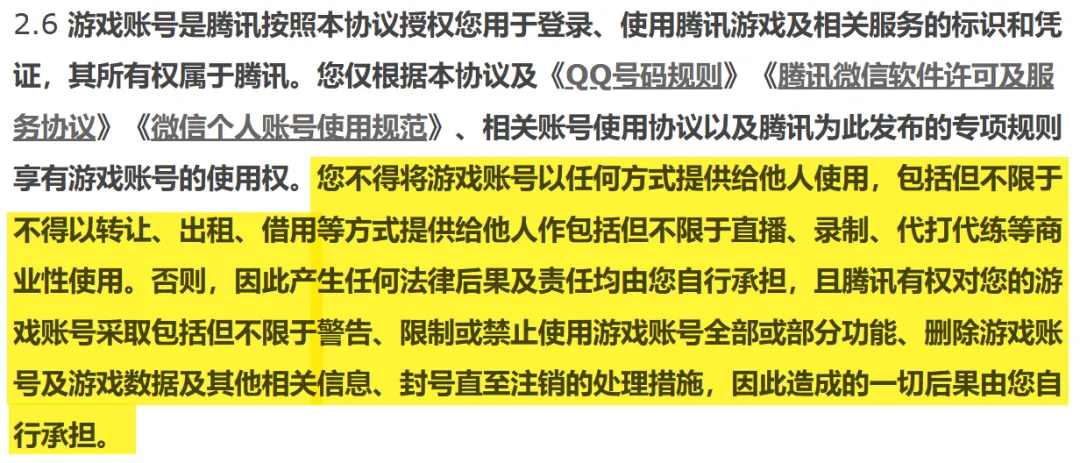
From the moment the owner scanned, he violated his contract with the game company.
Therefore, generally speaking, the owner also cannot contact Tencent to “recover” the equipment.
However…
The owner’s violation (boosting) infringed the game company’s rights (constituting breach of contract). Even if the game company cleared all equipment or banned the account (also a “one-click clear”), that would be the company exercising its contractual rights.
But this absolutely does not mean that the streamer (as a third party) thereby obtained the privilege of “legally destroying someone else’s property” (constituting tort liability).
3. Civil Liability
No matter how justified the streamer sounds in his post-incident statement, insisting he “will never bow down or admit fault,” this does not change the legal fact that he must bear civil tort liability.
Chinese law has already recognized the value of online virtual property:
Where laws provide for the protection of data and online virtual property, such provisions shall apply.
Civil Code of the People’s Republic of China, Article 127
The limited-edition supplies and high-level ammunition in a game account are property obtained by players through significant time, effort, and real money investment, with clear property attributes.
The streamer’s “stream rules” are worth less than a piece of scrap paper before national law.
If the player violated the streamer’s unilateral rule of “no scanning unless captain,” the streamer’s legitimate right was merely to “refuse service.”
He could immediately log out and leave, or even mute and block the player in the stream.
But the streamer had no authority whatsoever to touch someone else’s property.
4. How Is Compensation Calculated?
Since civil infringement has been established, the conclusion is clear: pay compensation.
Article 1184: Where another person’s property is infringed, property losses shall be calculated based on the market price at the time of loss or other reasonable methods.
Civil Code of the People’s Republic of China
But this is often the biggest obstacle for players seeking legal recourse: how do you value virtual property?
Many streamers dare to brazenly destroy accounts and arrogantly post statements precisely because they’re confident that players “can’t calculate the loss and can’t win the lawsuit.”
After all, Chinese law does not allow virtual property to be directly and bidirectionally converted into legal tender. And game companies, to avoid future massive claims from equipment nerfs, bans, rollbacks, etc., often assert in their EULAs: “Equipment and items are merely part of the game service and have no real-world monetary value.”
Does this mean that players who’ve invested so much into their accounts can only “accept their bad luck”?
Of course not.
In practice, determining the value of online virtual property, due to the lack of clear legal provisions, has always been a challenge in judicial practice.
However, in recent years, courts have explored several relatively clear valuation paths for virtual property as equally “valuable property,” referencing asset appraisal methods: the market approach, the income approach, and the cost approach.
Among these, based on their characteristics, judges more often use the market approach and cost approach to estimate game virtual property value.
Market Approach
The market approach values items based on the average price of similar items in official and [legal] third-party markets.
This is the most intuitive calculation: whatever these items sell for in the current market determines their value.
However, note that if the official rules explicitly say “equipment and items are not tradable,” judges may sometimes decline to recognize third-party market prices (e.g., trading platforms) to avoid controversy.
Therefore, this approach is more suitable for games with official trading platforms like NetEase’s “Treasury Pavilion” for account valuation.
In games like Delta Force, third-party transaction prices submitted by players can usually only serve as a “reference baseline” in the judge’s mind to anchor the base value.
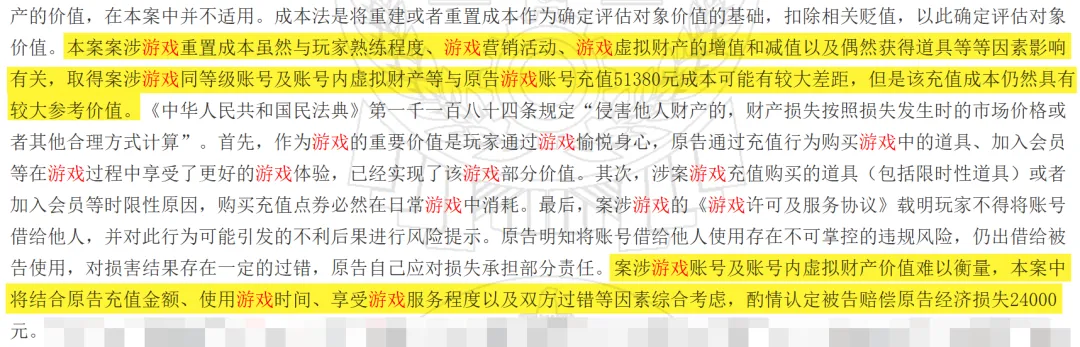
Cost Approach
The cost approach refers to the actual cost of obtaining these items or the cost required to restore the account to its previous state.
If those rare gold/red equipment was obtained through loot boxes, gacha, or battle passes, players can directly pull up their WeChat/Alipay payment records.
Then claim compensation based on the historical average top-up expectation value (acquisition/restoration cost) for obtaining that item.
Income Approach
The income approach predicts the expected future income from the asset over a period, selects an appropriate discount rate (capitalization rate/rate of return), and discounts it to present value at the valuation date.
The income approach is generally difficult to apply in the gaming realm—the core challenge is estimating the future income that the relevant virtual property (game items) would bring to the user.
It’s mainly hard to prove to a judge that these rare guns and hundreds of rounds of ammunition will definitely help you “farm gold” for a certain amount of money in the future, especially since Tencent explicitly says item trading is prohibited.
(For Web3/GameFi on-chain games not currently supported in China, this logic might potentially be used to calculate token income. Just know this exists.)
Judge’s Discretion
If a precise property valuation report cannot be provided, the judge will comprehensively consider factors such as the account’s registration age, level, rarity of destroyed equipment, the player’s total historical top-up amount, and—more importantly—the subjective maliciousness of the infringer (the streamer), to discretionarily determine a compensation amount.
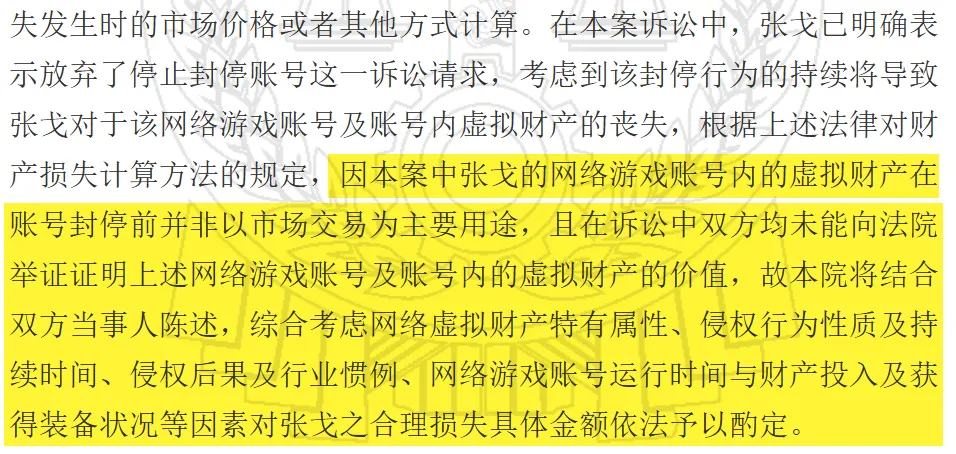
The streamer may have thought “can’t calculate an exact amount = no need to pay,” but in legal practice, this is pure fantasy.
Faced with such extremely malicious, mocking account destruction behavior, the compensation amount determined by the judge will definitely be enough to make the infringer’s life difficult.
5. Criminal Liability
If paying compensation is just a financial loss, then considering the core details of this incident, the streamer’s behavior is already dangerously close to the criminal law.
Article 275: Whoever intentionally destroys public or private property, if the amount is relatively large or there are other serious circumstances, shall be sentenced to fixed-term imprisonment of not more than three years, criminal detention, or a fine; if the amount is huge or there are other especially serious circumstances, shall be sentenced to fixed-term imprisonment of not less than three years but not more than seven years.
Criminal Law of the People’s Republic of China
In recent years, there have been numerous guiding cases in judicial practice recognizing game virtual property as property protected by criminal law.
As long as the value of the destroyed virtual property reaches the “relatively large” threshold (in practice, around 5,000 RMB), the public security authorities can file a criminal case.
Beyond the loss, “intent” must also be proven.
And in this case, the strongest evidence of the streamer’s “subjective malice” is precisely that “10-second delay.”
Although the streamer insists in his statement that he “did not deliberately destroy” and “had no vengeful intent,”
the objective fact is: the streamer knew there was a 10-second stream delay, knew that by the time the account owner heard the “10-second countdown” start, it was already impossible to log back in and stop it.
This shows that his so-called “warning” was objectively entirely false and invalid, existing only for content effect. (And the actual countdown wasn’t even 10 seconds.)
If he really just wanted to “follow the rules,” he could have spent 1 second pressing Alt+F4 to “exit the game.”
But he instead chose to spend several minutes, knowing the other party was a freshly expired long-time fan with the chat begging for mercy, to precisely select all the high-value items from the warehouse, sell them, and destroy them in one go.
This behavior of using information asymmetry and technical delay to forcibly and completely destroy someone else’s high-value property is not something that can be dismissed with “you didn’t lock your account.” It fully constitutes the direct intent of “pursuing the occurrence of damage results” in criminal offenses.
So what’s the sentencing standard?
Here’s a reference case:
Someone logged into another person’s game account and used in-game functions to destroy virtual items.
The court ultimately found the victim’s economic loss to be 12,554.67 RMB and sentenced the defendant to 5 months criminal detention, suspended for 10 months.
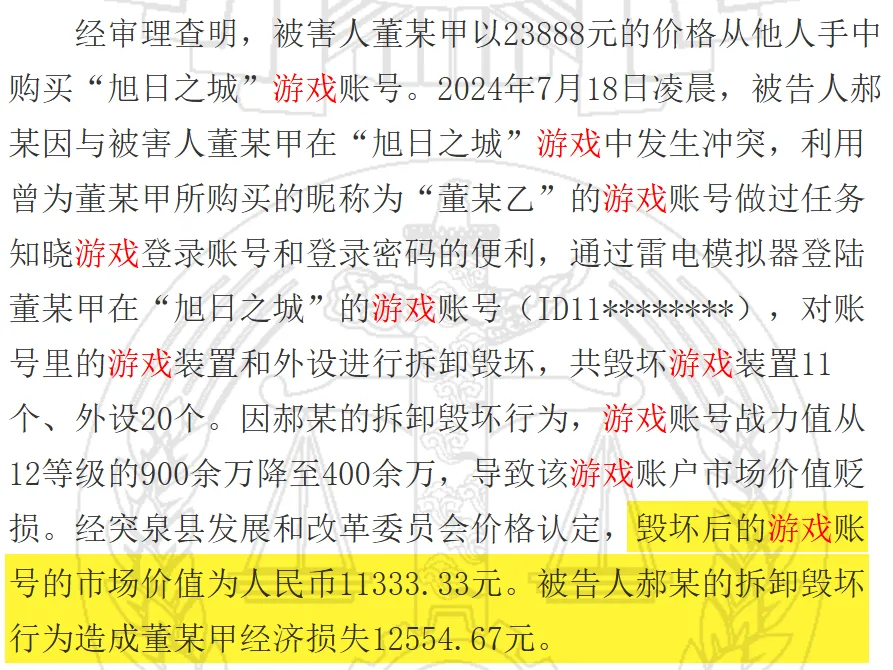
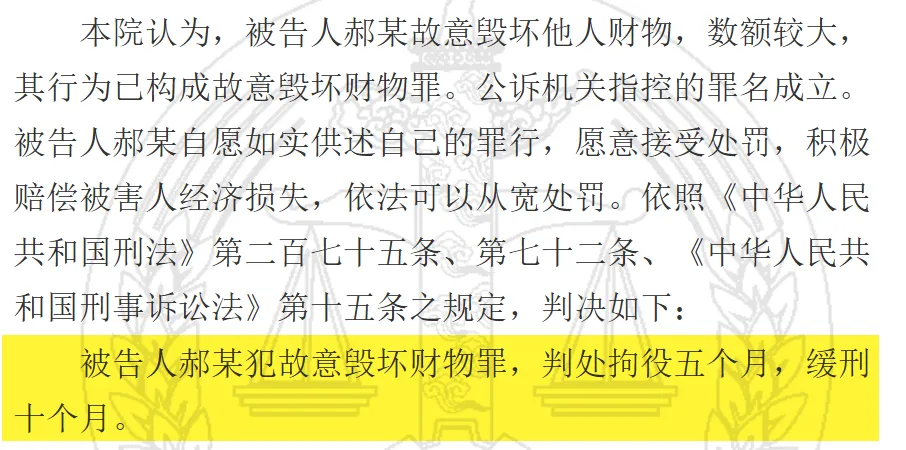
I’m not a Delta Force player—readers are welcome to estimate the loss of the account owner.
And also estimate how long this streamer might serve.
6. Enforcement Suggestions
Since some colleagues have already taken this case, I won’t directly advise the victim here.
But we can discuss what to do if you encounter a similar situation:
1. Evidence Preservation (Most Important Step)
First, immediately record the complete livestream replay (proving the intentional destruction process); save the chat record (proving you identified yourself and the streamer was aware); and save screenshots and payment records from before and after the account was destroyed.
For streamers without auto-replay enabled, it’s recommended to start recording yourself when providing account access, just in case.
2. Contact the Game Company, Try to Stop the Loss
Take your evidence and immediately contact the game’s official customer service, explaining that your account was maliciously destroyed, and request data freezing and technical rollback.
Of course, major companies may not respond.
A rollback would be ideal. If not possible, what we value more is the official reply.
It serves to prove that the account was indeed logged in from another location and that items were lost (property damage occurred).
3. File a Police Report and Lawsuit
With all the evidence organized, you can file a lawsuit in a court with jurisdiction and report to the local police station (grounds: intentional destruction of property).
7. Final Thoughts
The internet is not a lawless place, and a livestream is even less a streamer’s “independent kingdom” where they can do as they please.
For the sake of twisted “content effect,” unreservedly turning the blade against fans who genuinely support you is not only a disregard for the law but also a trampling of humanity.
Hopefully, this incident serves as a wake-up call for all streamers:
Today you may enjoy a few minutes of pleasure from an “account destruction” video, gaining praise from mindless fans and traffic revenue. Tomorrow you may sit in the defendant’s seat, paying for your arrogance.
Also, a reminder for players who might encounter this streamer in Genshin Impact and Wuthering Waves sections:
Keep an eye on your top-tier artifacts and echoes. Don’t casually “scan to login.”

Because once your fan badge expires, even for a minute, a year’s worth of effort may be used as fireworks for his next “exciting stream content.”
Of course, given the current public opinion trend, the more likely outcome is that he won’t be coming back.