[Quick Check] MongoDB High-Risk Vulnerability Exposes Game Data — What Legal Liability for Not Patching?
Analyzes the technical principles and impact scope of MongoDB high-risk vulnerability CVE-2025-14847 (Mongobleed), providing enterprises with remediation and emergency response plans, and explains the legal consequences of not patching under China's Cybersecurity Law, Data Security Law, and Personal Information Protection Law.
Recently, MongoDB officially published an important blog post about a security update for MongoDB Server.
MongoDB CTO Jim Scharf disclosed that their internal security engineering team discovered a serious security vulnerability (CVE-2025-14847) in mid-December. Because of its similarity to the infamous “Heartbleed” vulnerability that once shook the internet, the security community has informally dubbed it “Mongobleed.”
Although the official statement emphasizes that the vulnerability was proactively discovered by the internal team and MongoDB’s own systems were not compromised, according to CISA’s directory, the vulnerability is rated CVSS 8.7 (High Risk) and has been added to the “Known Exploited Vulnerabilities” (KEV) catalog, meaning attackers are actively exploiting it against unpatched systems.
As a well-known NoSQL database, MongoDB is widely used as the underlying storage architecture in the gaming industry. Game companies heavily dependent on it now have a busy New Year ahead.
But if game companies choose to ignore the warning and delay patching, thinking “we’ll deal with it after the holidays,” they not only face data breach risks but also potentially severe legal consequences.
This article covers the vulnerability from technical principles to legal consequences.
*This article represents only the author’s personal views and does not constitute legal advice or a legal opinion.
I. What is MongoDB?
Before discussing the vulnerability, let’s first understand what MongoDB is.
MongoDB is a non-relational database (NoSQL). Unlike traditional relational databases that are structured like Excel spreadsheets, MongoDB is more like a flexible “document library” that stores data in JSON document format.
More importantly, it’s open source with a community edition that you can self-host for free.
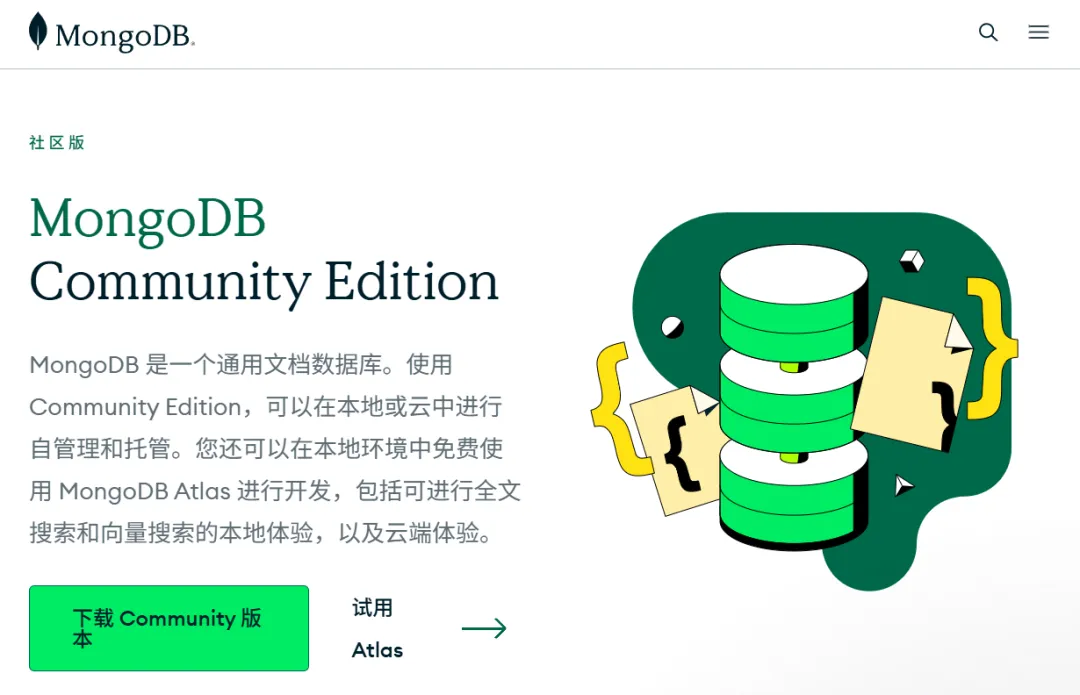
Major cloud service providers also offer related services for purchase:


With its high-performance read/write capabilities, flexible data structure, and powerful horizontal scaling, MongoDB has become one of the preferred databases for game developers worldwide.
Many well-known domestic game companies use MongoDB as their backend database, including NetEase Games mentioned in MongoDB’s official news:

And “Romance of the Three Kingdoms: Strategic Edition” produced by Lingxi Interactive Entertainment, as shared by Alibaba:
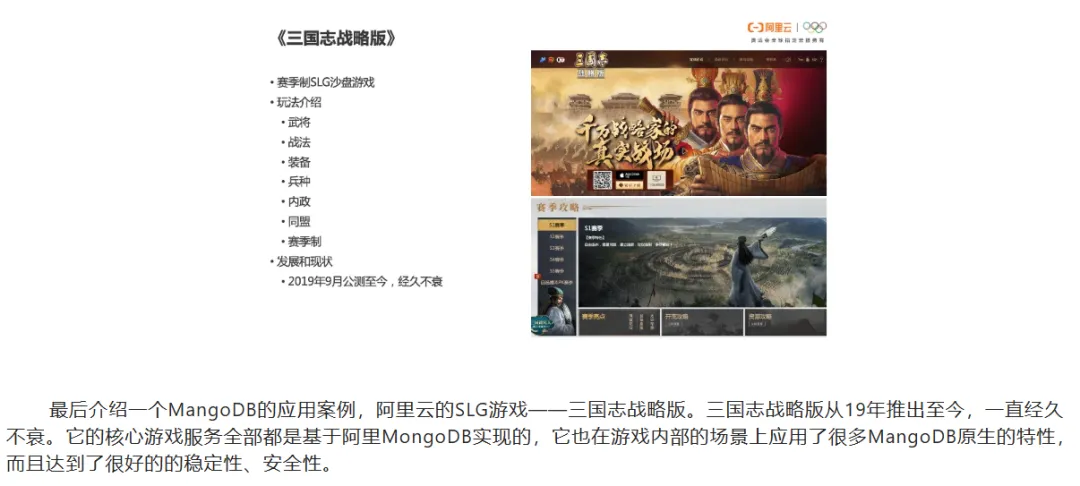
For modern game servers, MongoDB is essentially the “safe” that stores players’ core virtual assets.
And once this “safe” develops a “crack,” the entire game’s economic system and user privacy will be exposed and vulnerable.
II. CVE-2025-14847 Vulnerability
The disclosed CVE-2025-14847 vulnerability lies in a logic defect in MongoDB’s handling of the Zlib compression protocol header.
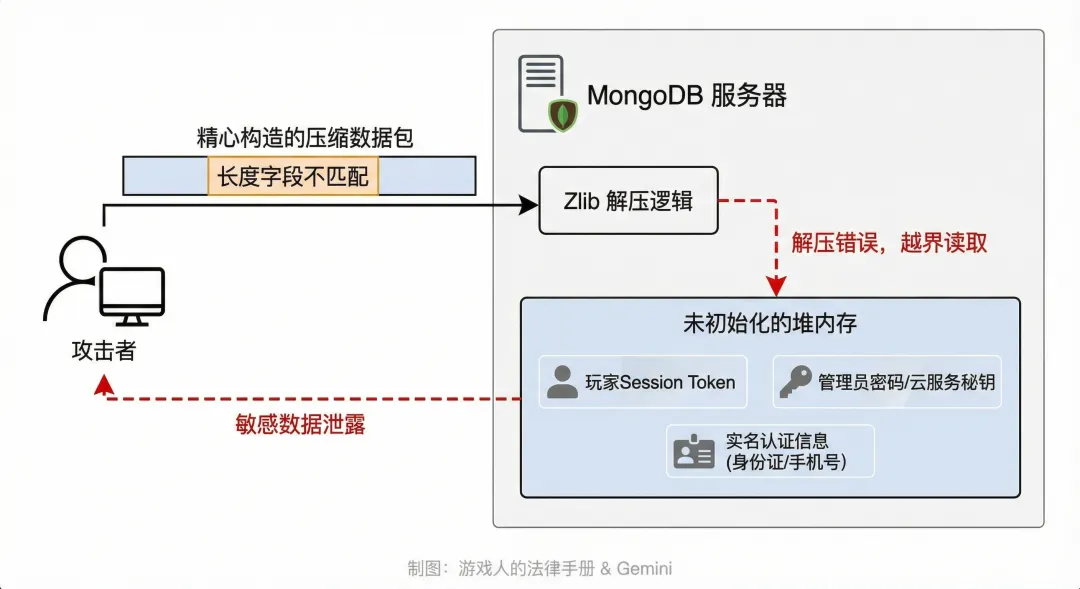
Simply put, when a client (game package) communicates with the database (game backend), if an attacker sends a specially crafted compressed data packet with mismatched length fields, MongoDB will error during decompression, allowing an unauthenticated client to read uninitialized heap memory.
This “uninitialized heap memory” often contains sensitive residual data just processed by the server.
Thus, attackers — without any username or password — can randomly read fragments of server memory data, like peering into a safe through a crack.
For game servers, these memory fragments may contain: session tokens of recently logged-in players (which attackers can use to hijack accounts), plaintext database admin passwords or cloud service keys, and players’ real-name authentication information or personal data such as ID numbers and phone numbers.
The vulnerability affects a wide range of versions, covering most MongoDB versions from v3.6 to v8.2 — essentially covering the vast majority of game products currently operating in the market that use MongoDB as their backend.
III. How to Patch and Comply
Although the New Year is approaching, it is recommended that legal departments of game companies immediately coordinate with technical teams to take action and minimize compliance risks.
According to the timeline disclosed in MongoDB’s official blog, the vulnerability was publicly disclosed via the CVE process on December 19, and patches were released for both Enterprise and Community editions.
For enterprises using MongoDB Atlas (the official managed cloud service), the official statement indicates that automatic patching was completed for most instances between December 12 and 18.
However, few domestic companies use the official hosted version, so the following compliance recommendations are for enterprises that purchased cloud services or self-host:
Version Check and Upgrade
It is recommended that technical teams first confirm whether their MongoDB version falls within the affected range.
According to the official announcement, the affected versions span a wide range, including MongoDB 8.2.0-8.2.3, 8.0.0-8.0.16, 7.0.0-7.0.26, 6.0.0-6.0.26, 5.0.0-5.0.31, 4.4.0-4.4.29, as well as versions 4.2, 4.0, and 3.6.
Once it is confirmed that an affected version is in use, the most thorough compliance approach is to follow MongoDB’s official guidance, verify in a test environment, and upgrade the production environment to the corresponding security version (e.g., 8.2.3+, 8.0.17+, 7.0.28+, 6.0.27+, etc.) as soon as possible.
Temporary Mitigation Measures
If you really want to get through the holidays first, or cannot immediately upgrade to the latest version in a short period (e.g., operations staff are on leave), consider taking the following temporary measures to reduce risk.
However, these are by no means long-term solutions, and version updates should still be completed as soon as possible:
[Disable Zlib Compression Protocol]
Since this vulnerability is related to mismatched length fields in the Zlib compression protocol header, operations staff can temporarily disable MongoDB’s Zlib compression feature and consider using other compression algorithms like Snappy or Zstd, or temporarily disable compression altogether, thereby reducing the risk of triggering the vulnerability.
[Strengthen Network Access Control]
Since the vulnerability allows “unauthenticated clients” to read memory, consider restricting the database’s network access permissions to prevent such reads.
Before completing the update, implement temporary network isolation measures, such as using firewalls, security groups, or Kubernetes NetworkPolicy to strictly limit MongoDB access to trusted internal IP addresses or specific application servers, ensuring that MongoDB ports are absolutely not exposed to the public network — reducing the attack surface to prevent external probing.
[Enhance Monitoring Logs]
It is recommended to closely monitor database logs for abnormal network connection attempts, unauthorized access patterns, or error messages related to Zlib decompression.
Set up scripts to provide strong alerts when relevant situations arise, ensuring you stay “informed.”
Compliance Evidence Archiving
Enterprises should thoroughly document the vulnerability investigation timeline, patch installation logs, and incident response records.
Even if actual remediation has not yet started, record the handling process, difficulties encountered, etc., and archive them in written form.
Maintaining proper records helps reduce the risk of being found to have “done nothing” in subsequent accountability proceedings.
IV. Legal Consequences of Refusing to Patch
With MongoDB officially issuing a clear announcement, providing patches, and warning of risks, CVE-2025-14847 is now a “known risk.”
If a game company still does nothing, the nature of the conduct will shift from “technical negligence” to “legal breach of duty.”
This means that if a data security incident occurs due to this vulnerability, the game company will face severe legal consequences.
Cybersecurity Law
The most direct violation is of the Cybersecurity Law.
Cybersecurity Law of the People’s Republic of China:
Article 25: Network operators shall develop cybersecurity incident response plans, promptly address system vulnerabilities, computer viruses, network attacks, network intrusions, and other security risks; when incidents endangering cybersecurity occur, immediately activate the response plan, take appropriate remedial measures, and report to relevant authorities in accordance with regulations.
If a game company, knowing that the official has released a patch for a high-risk vulnerability, fails to fulfill its update obligation — leading to server intrusion — it may be deemed by regulators as “failing to fulfill network security protection obligations.”
Since the official patch has been released, companies cannot use “technically impossible to fix” as a defense. Relevant authorities may order corrections and impose fines on both the company and the directly responsible personnel.
Data Security Law
If exploitation of the vulnerability leads to more serious data breaches, the strict penalty mechanism of the Data Security Law will be triggered.
Data Security Law of the People’s Republic of China:
Article 29: Entities conducting data processing activities shall strengthen risk monitoring; upon discovering data security defects, vulnerabilities, or other risks, shall immediately take remedial measures; upon the occurrence of a data security incident, shall immediately take response measures, promptly notify users, and report to relevant authorities as required.
For enterprises that refuse to patch vulnerabilities resulting in serious consequences, penalties will be significantly escalated: companies may face fines up to RMB 2 million, directly responsible personnel up to RMB 200,000, and orders to suspend relevant business, cease operations for rectification, or revoke relevant business permits or business licenses.
Data Security Law of the People’s Republic of China:
Article 45: If organizations or individuals engaged in data processing activities fail to fulfill the data security protection obligations under Articles 27, 29, and 30 of this Law, the relevant authorities shall order correction and issue a warning, and may impose a fine of not less than RMB 50,000 but not more than RMB 500,000; directly responsible managers and other directly responsible personnel may be fined not less than RMB 10,000 but not more than RMB 100,000. If correction is refused or serious consequences such as large-scale data leakage result, a fine of not less than RMB 500,000 but not more than RMB 2 million shall be imposed, and the relevant business may be suspended, operations rectified, or relevant business permits or business licenses revoked; directly responsible managers and other directly responsible personnel shall be fined not less than RMB 50,000 but not more than RMB 200,000.
Personal Information Protection Law
Naturally, there will also be strict penalties under the Personal Information Protection Law.
Game memory often temporarily stores players’ personal information such as ID numbers and phone numbers. If attackers exploit the vulnerability to steal this information, the company directly violates legal provisions on preventing personal information leaks.
Personal Information Protection Law of the People’s Republic of China:
Article 57: When personal information is or may be leaked, tampered with, or lost, the personal information processor shall immediately take remedial measures and notify the authorities responsible for personal information protection and the individuals. The notification shall include:
(1) The types, causes, and potential harm of the personal information that has been or may be leaked, tampered with, or lost;
(2) Remedial measures taken by the personal information processor and measures individuals can take to mitigate harm;
(3) Contact information of the personal information processor.
If the personal information processor’s measures can effectively prevent harm from information leakage, tampering, or loss, the processor may not notify individuals; if the authorities responsible for personal information protection deem that harm may occur, they have the right to require the processor to notify individuals.
Especially when the official has already provided a solution, a leak caused by failure to patch will be considered “failure to take necessary measures.”
Once deemed a serious violation, the company may face a fine of up to RMB 50 million or up to 5% of the previous year’s turnover, and directly responsible personnel may face fines of up to RMB 1 million.
Personal Information Protection Law of the People’s Republic of China:
Article 66: If personal information is processed in violation of this Law, or if the obligation to protect personal information under this Law is not fulfilled, the authorities responsible for personal information protection shall order correction, issue a warning, confiscate illegal gains, and order the suspension or termination of services for applications that illegally process personal information; if correction is refused, a fine of up to RMB 1 million shall be imposed; directly responsible managers and other directly responsible personnel shall be fined not less than RMB 10,000 but not more than RMB 100,000.
If the illegal act is serious, the authorities responsible for personal information protection at or above the provincial level shall order correction, confiscate illegal gains, and impose a fine of up to RMB 50 million or up to 5% of the previous year’s turnover, and may order suspension of relevant business or operations for rectification, notify relevant authorities to revoke relevant business permits or business licenses; directly responsible managers and other directly responsible personnel shall be fined not less than RMB 100,000 but not more than RMB 1 million, and may be prohibited from serving as directors, supervisors, senior managers, or personal information protection officers of relevant enterprises for a certain period.
Civil Compensation
Currently, the Civil Code has defined the nature of “online virtual property.”
According to the Civil Code and consumer protection laws, if a system vulnerability leads to player account theft or virtual property loss, and the game company, as a service provider, is clearly at fault, the company must compensate users for their losses.
Although compensation may only coverrecharge amounts, there is also the hidden cost of reputational damage — a losing proposition.
V. Final Thoughts
Although 2026 is just two days away, as MongoDB’s official blog states: “Software security is an ongoing process, and trust depends on how issues are discovered, resolved, and communicated.”
For game companies, a swift response to publicly disclosed high-risk vulnerabilities is not only a technical necessity but also a baseline for legal compliance.
The official patch is ready, the risk is public — legal and security personnel at all game companies should act immediately to investigate and eliminate risks, avoiding irreparable legal crises caused by “overly optimistic holidays.”