Up to 2 Million RMB for R&D, 5 Million for Operations — Small Games Included! Guangzhou's New Game Policy Explained
Interprets the Guangzhou Municipal Government's 'Eighteen Measures to Support the Development of the Gaming and Esports Industry,' covering pre-research grants, long-term operational rewards, technology transformation, and full-chain esports support.
Just now (2025.12.25)!
The Guangzhou Municipal Government General Office officially issued the “Eighteen Measures to Support the Development of the Gaming and Esports Industry” (hereinafter “the Eighteen Measures”).
The new policy clearly sets the goal of “entering the ranks of the world’s most influential cities in the gaming and esports industry by 2030,” providing substantial financial support across the entire chain — R&D, operations, overseas expansion, esports, and talent.
As one of China’s key pillars of the gaming industry, Guangzhou’s new policy not only continues the pursuit of premium content but also offers a remarkably sincere “gift package” in technological innovation (Metaverse/AI), pre-project funding (reducing R&D pressure), and the full esports industry chain.
Up to 2 million RMB for R&D, up to 5 million for individual awards, and an annual cap of 10 million per company!
It’s truly a “Christmas gift” for Guangzhou’s gaming community.
What exactly are the “Measures”? Who gets the funding? How is it distributed?
Let’s take a look.
*This article represents only the author’s personal views and does not constitute legal advice or a legal opinion.
I. At a Glance: How the Funding Is Distributed
I’ve organized it directly into one clear image:
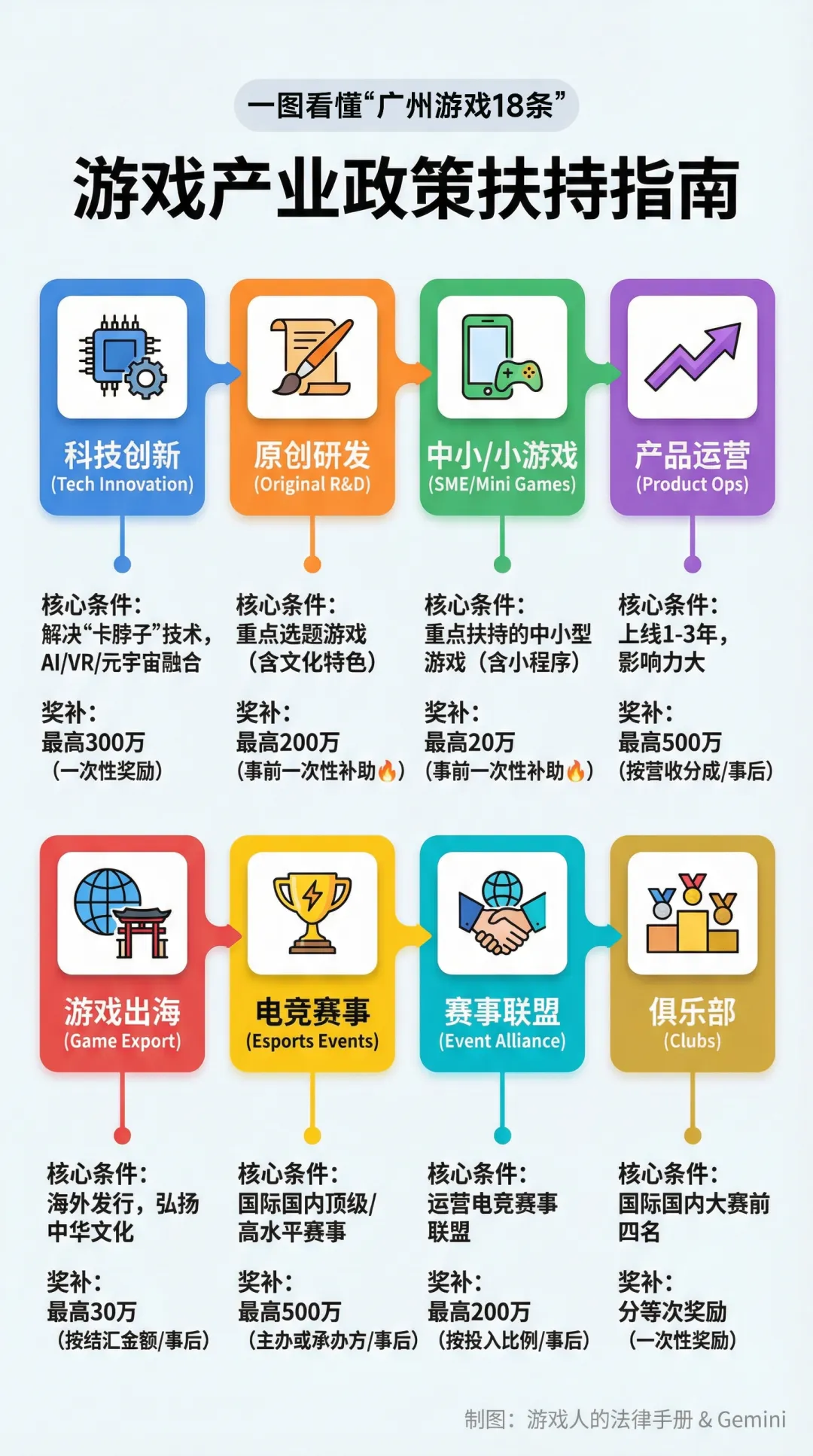
II. Deep Dive: Five Major Signals
1. R&D Gets “Pre-funding” — Small Games Included
This may be the most heartwarming aspect of the policy.
In recent years, R&D costs in the gaming industry have been high, accompanied by skyrocketing user acquisition costs, players’ growing demand for premium (AAA-quality) game projects, reduced playtime, and even a “winner-takes-all” trend at the top.
In this environment, especially for small and medium-sized game companies and studios, the R&D risk is enormous.
Article 5 of the “Eighteen Measures” clearly states:
“Grant R&D entities a one-time pre-project subsidy of up to 2 million RMB.”
This means the government is willing to share the early R&D risk with enterprises.
At the same time, the policy specifically mentions “small and medium-sized games (including mini-program games),” offering a pre-project subsidy of up to 200,000 RMB.
For indie game teams and mini-program developers, this is undoubtedly a valuable source of startup funding.
But note: not any game qualifies — it must embody “the essence of excellent traditional Chinese culture and Lingnan cultural characteristics.”
2. No “One-Hit Wonders” — Big Rewards for Long-term Premium Operations
In addition to “fuel in the snow” for developers, the new policy also offers “icing on the cake” for operators.
Article 6 of the “Eighteen Measures” states:
For outstanding game products that have been online for more than one year but less than three years and possess strong cultural communication power and social influence, a one-time post-project subsidy of up to 5 million RMB will be granted.
Two details here are worth considering:
First, the time threshold (1-3 years):
Less than 1 year — product stability is unproven, potentially a “flash-in-the-pan” user-acquisition harvesting product;
More than 3 years — typically a mature “cash cow” product.
The 1-3 year period is precisely the critical growth phase where a product transitions from “hit” to “classic IP.” This funding effectively supports companies in version iteration and long-term operations, clearly signaling “reject fast-food games, encourage long-termism.”
Second, the “soft power” indicator:
Funding depends not only on revenue (revenue share) but also on “cultural communication power and social influence.”
This means a game that is purely profitable but has mediocre reputation or even compliance controversies will likely miss out on this award.
Companies are advised to prepare not only operational financial statements but also their product’s “social responsibility report” or “cultural attribute supporting documents” when applying.
Thinking about it, I can probably guess which game will be among the first batch of awardees — the TGA award-winning game product: “XX”
3. Not Just Playing Games — It’s Ultimately About Technology
Article 4 of the “Eighteen Measures” highlights artificial intelligence, virtual reality, the metaverse, and ultra-high-definition video as key areas.
It encourages companies and organizations to conduct R&D around “bottleneck” technologies in the gaming field and encourages game companies to transition toward “hard tech,” achieving deep integration of “gaming + technology.”
Any quality project that achieves significant breakthroughs in gaming technology (for example, solving a “bottleneck” technology) can receive up to 3 million RMB in rewards after expert review. Additionally, the policy strongly encourages undertaking national-level major projects.
As for what exactly constitutes a “bottleneck” technology in the gaming field?
GPUs? Engines? Modeling software? Large models?
Or something else?
That’s worth discussing and exploring.
4. Esports Full Package: From Teams to Tournaments to Venues — Everything Covered
Guangzhou is home to teams like TT, GZG, and GZ Charge, as well as a massive esports user base — as evidenced by the recent inaugural Guangdong Provincial Esports Super League kicking off in Huangpu District, Guangzhou.
This policy’s support for esports is comprehensive:
Tournaments: As long as the event tier is high enough, subsidies go up to 5 million RMB.
Clubs: As long as they achieve results (top four in high-level domestic or international esports competitions), there are rewards.
Leagues: Forming tournament leagues — up to 2 million RMB in support.
Venues: Support for building and renovating professional venues.
This is a huge boon for major tournaments looking to land in Guangzhou (such as LPL, KPL, or even international events like the World Championship).
5. Industry Map: Six Major Clusters Identified
Article 12 identifies Guangzhou’s gaming and esports “landmarks”: Keyun Road, Financial City, Pazhou, Wanshengwei, Yuzhu, and the Greater Bay Area Game Valley.
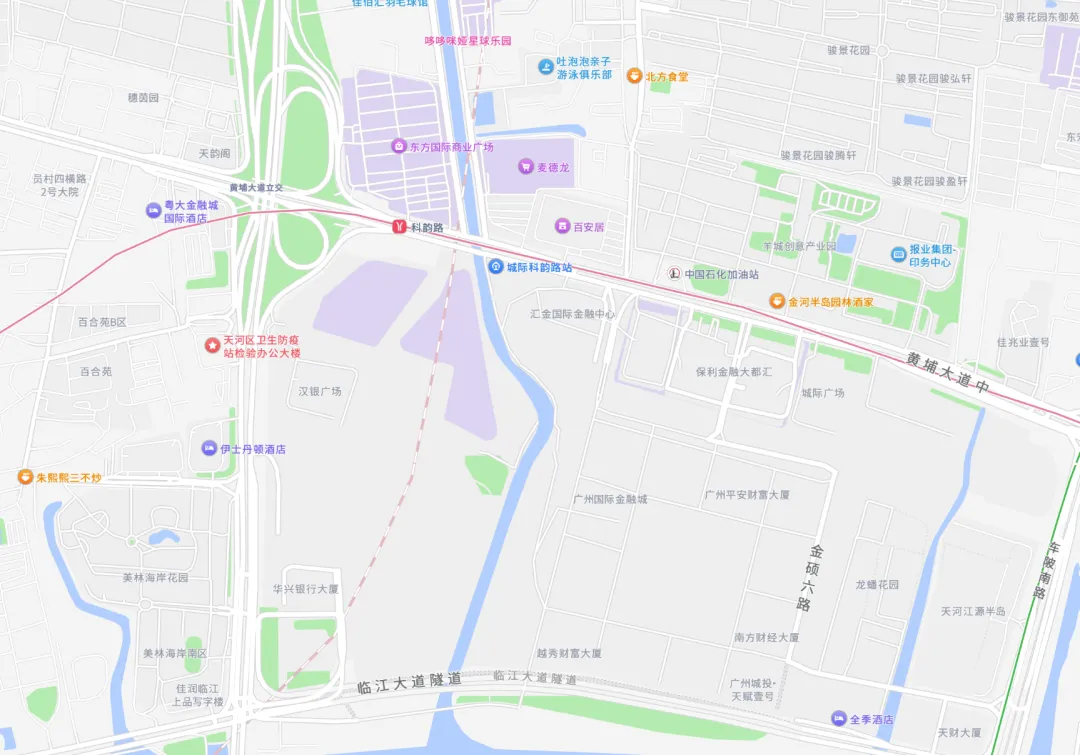
(Keyun Road — Financial City)
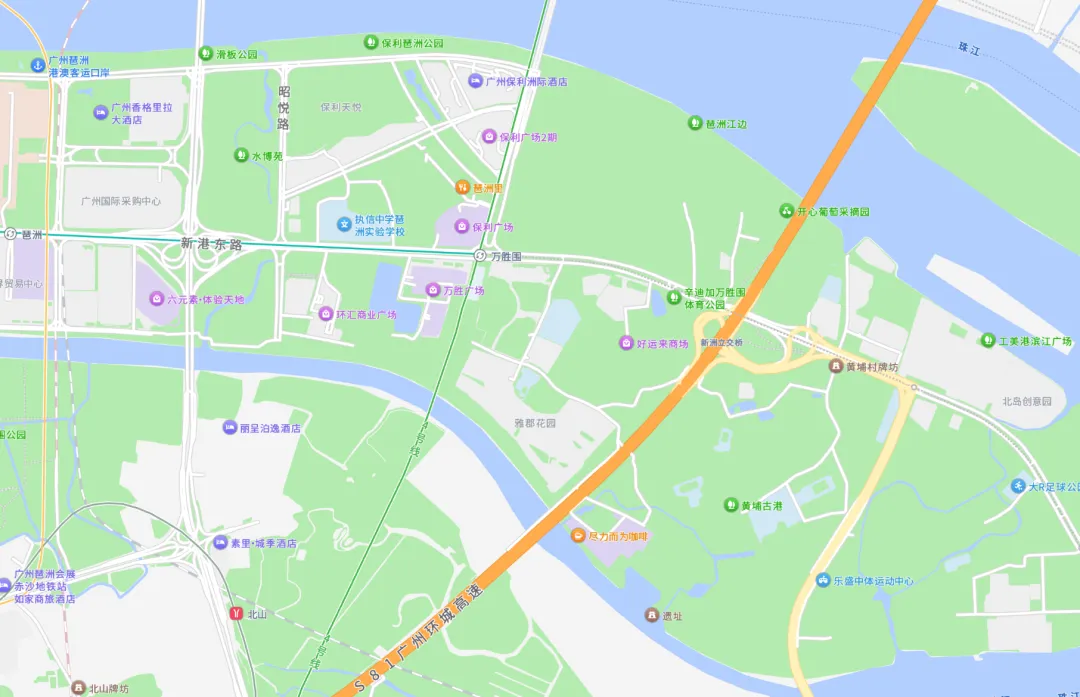
(Pazhou — Wanshengwei)
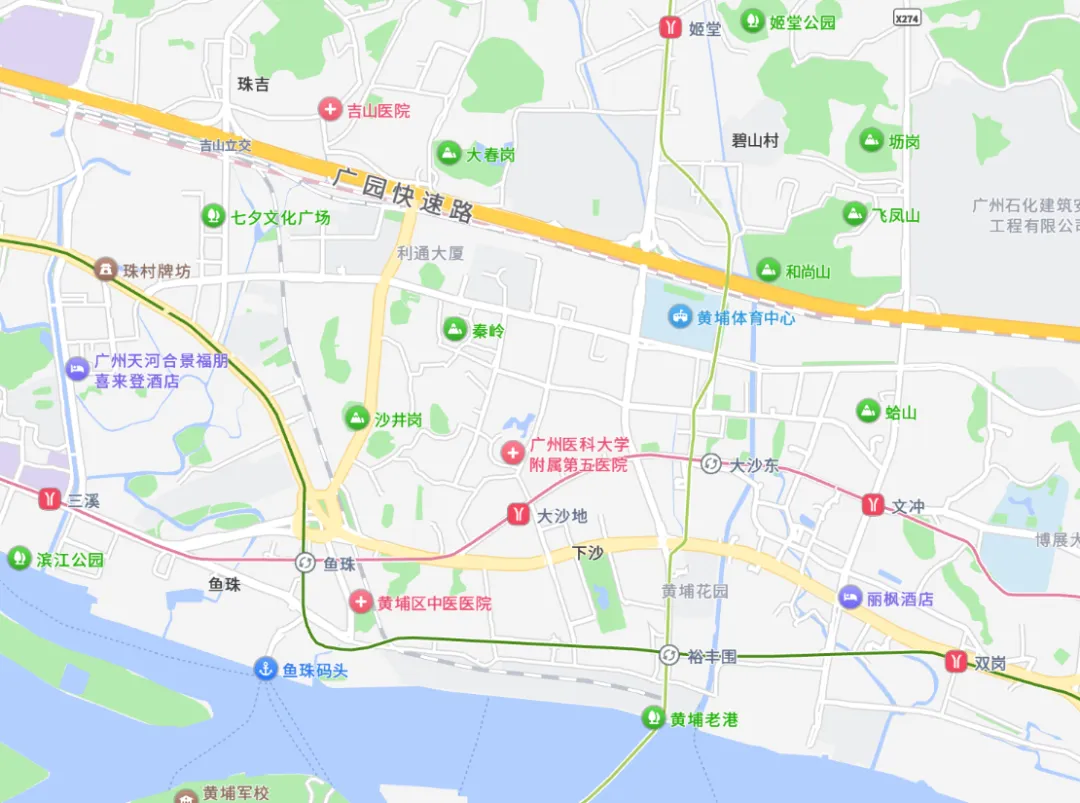
(Yuzhu — Greater Bay Area Game Valley (partial))
Companies already in or planning to move to these areas may enjoy more centralized park services and supporting facilities in the future.
Additionally, the policy mentions a “grant-to-investment” reform pilot, meaning future support methods will be more flexible, potentially introducing government guidance funds for equity investment.
III. Application Tips
While there are many subsidies, some points require attention:
Cap Limit
Although there are many application items, remember that a single company’s annual cap is 10 million RMB.
Major companies need to plan their internal project applications carefully, selecting the most competitive projects (those with insufficient R&D funding).
My personal suggestion: if a big project is already profitable, there’s no need to “add icing to the cake.” Also, please leave some projects for small and medium-sized companies to apply for.
After all, “a hundred flowers blooming” better benefits the development of the gaming industry.
Avoid Duplication
Different versions of the same game (e.g., mobile version, PC version, and mini-game version) are considered the same product and cannot be applied for repeatedly.
As for whether “reskinning” will be investigated — the standards haven’t been set, so it’s uncertain.
Therefore, small companies and indie studios should develop more different projects and create more “small but beautiful” products to help with annual subsidy applications.
Compliance First
Article 18 specifically emphasizes:
“Applicants found to have engaged in fraud, misappropriation of funds, or other misconduct shall have their subsidies and rewards recovered and shall be ineligible to apply for subsidy or reward projects under these measures for three years. If laws or regulations are violated, the matter shall be transferred to judicial authorities for handling.”
Therefore, application materials must be standardized. A subsidized project can fail commercially, but the R&D progress and deliverables should meet the standards committed to in the application (there will be “performance evaluations” and ongoing “tracking supervision” during the application period). Otherwise, not only may the funds need to be returned, but your credit could also be affected.
But! You absolutely cannot just create a “new folder,” take the money, and run. Nor can you “rob Peter to pay Paul” — using subsidy funds to develop other projects.
Otherwise, having the subsidy revoked would be the least of your worries — there’s also the possibility of jail time.
IV. Final Thoughts
At the tail end of 2025, Guangzhou has sounded the charge toward becoming a global gaming and esports hub by 2030.
From the boldness of “pre-project subsidies” to the “10 million RMB cap,” Guangzhou’s “18 Measures” are a grand “Christmas gift” — or even a “New Year’s gift.”
For game developers rooted in Guangzhou, this is not just financial support — it’s a boost of confidence.
After all, Article 17 also mentions optimizing the business environment and maintaining market order. Hopefully, riding this wave, there will be more judicial protection for the gaming industry’s most headache-inducing problem: difficulty in collecting payments.
Although the gaming industry is currently a bit chilly, hopefully it will get warmer.
Bosses and indie producers — are you ready to apply?